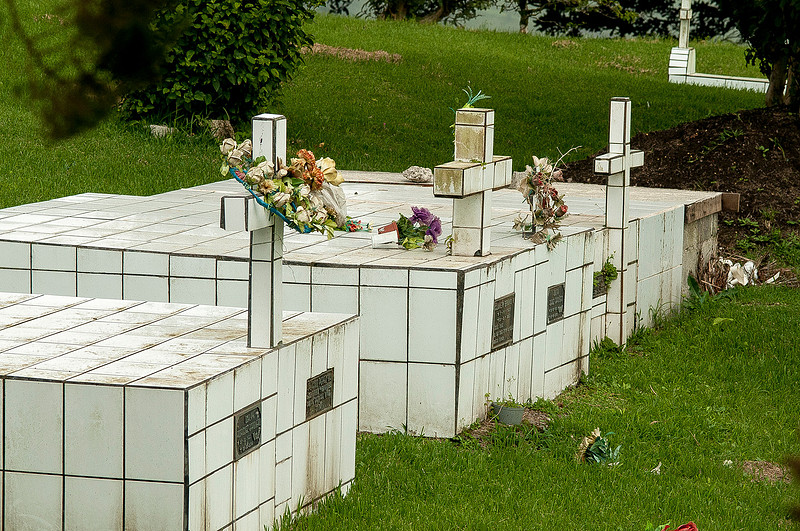
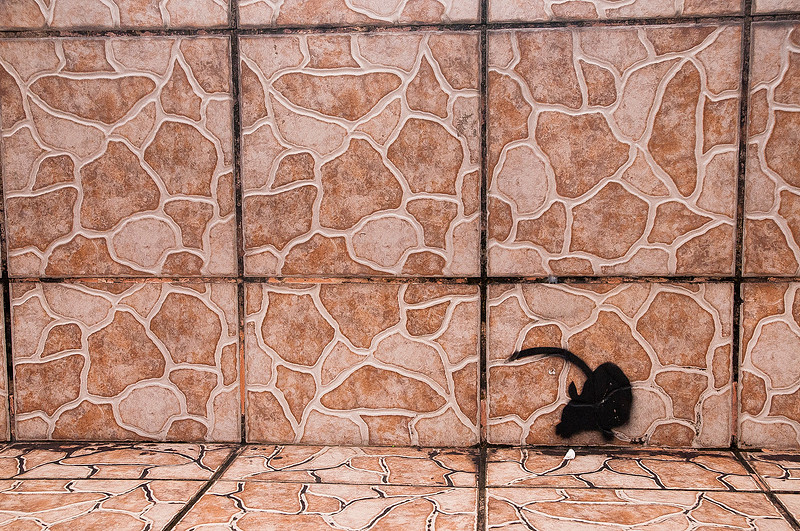
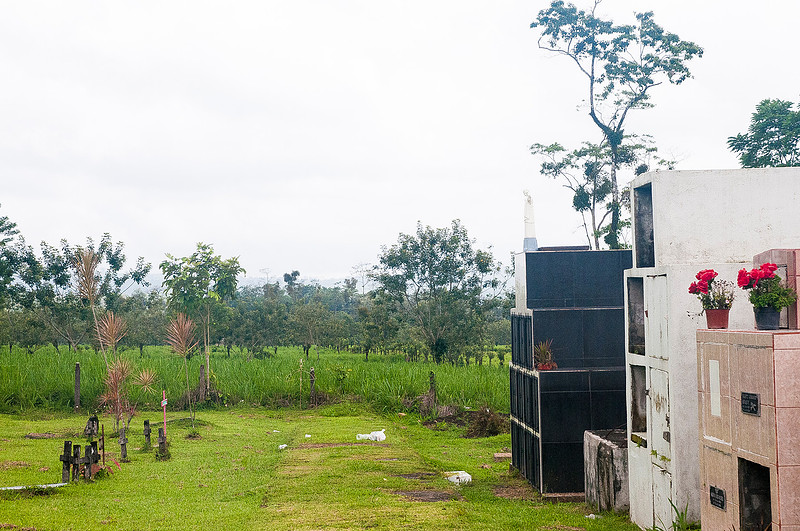
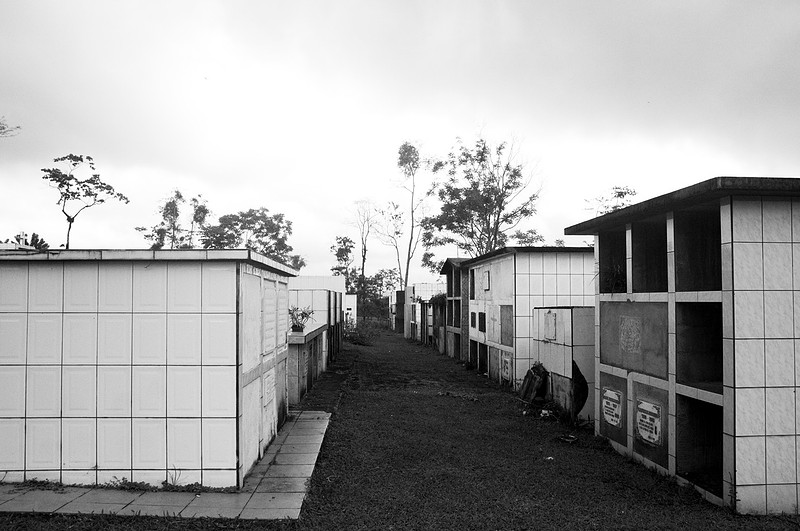
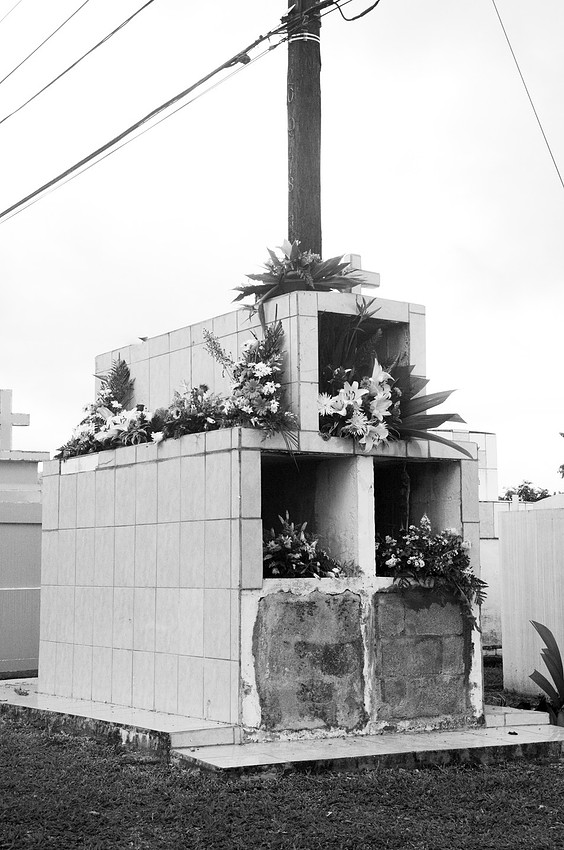
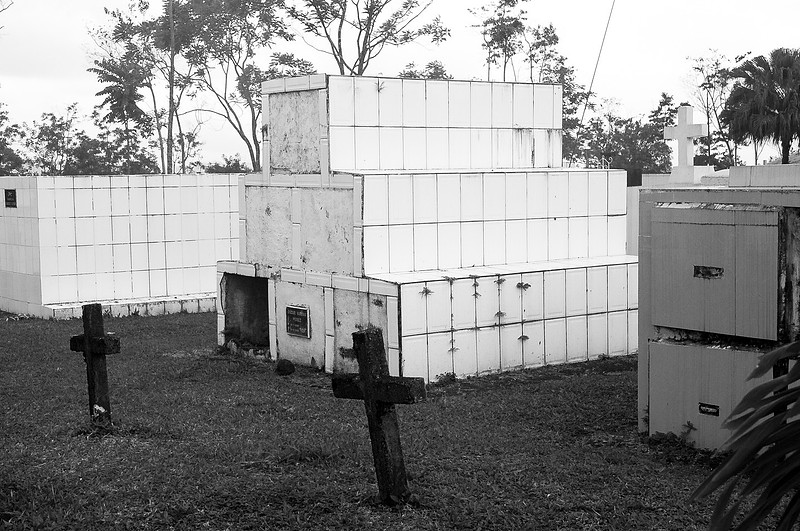
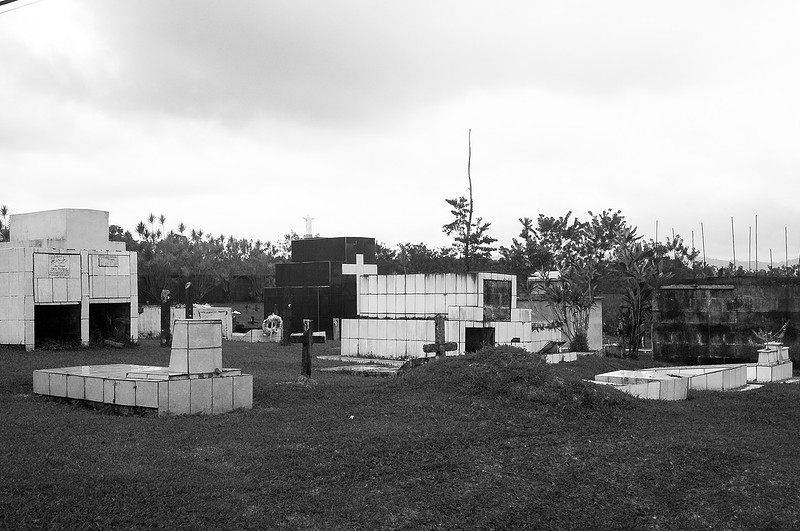
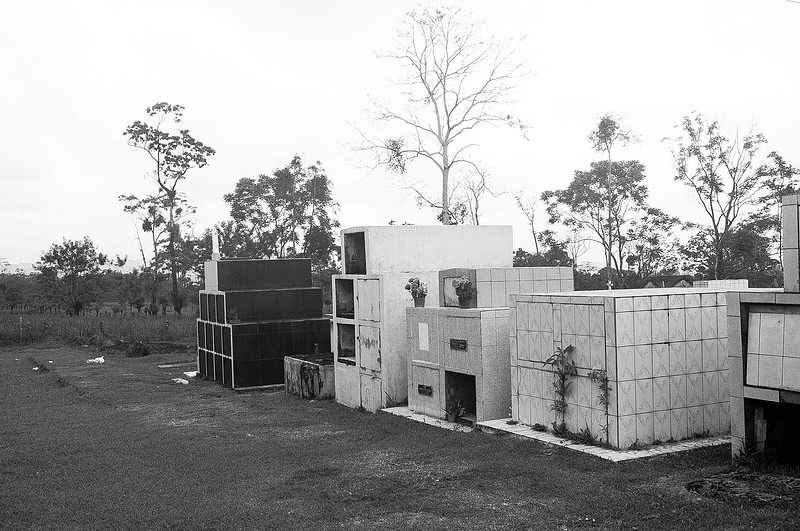
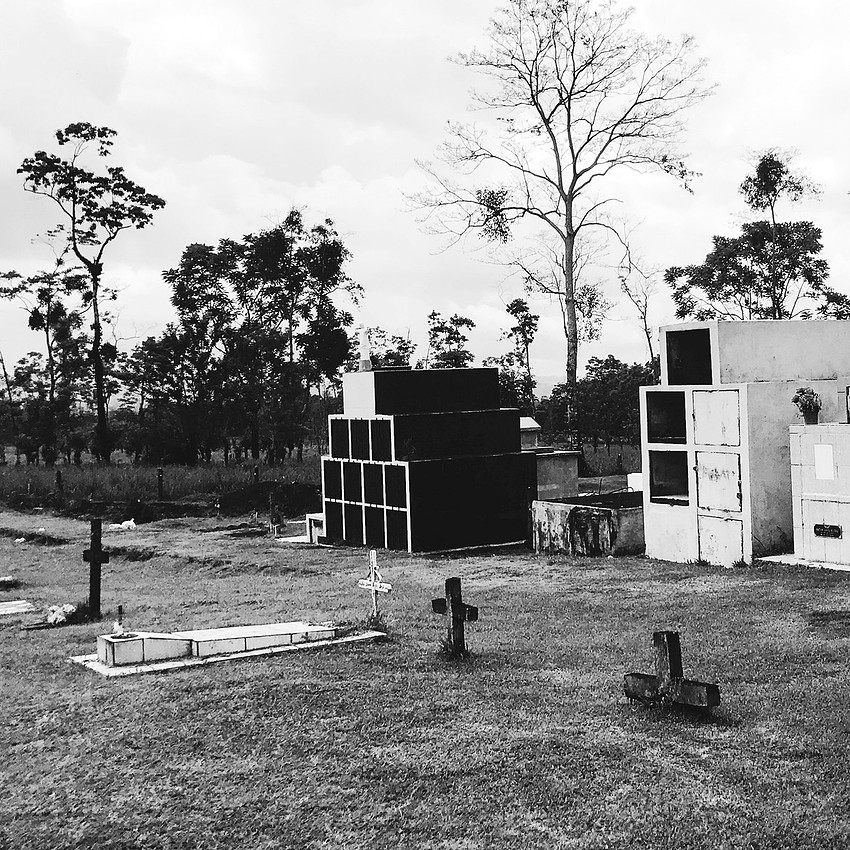
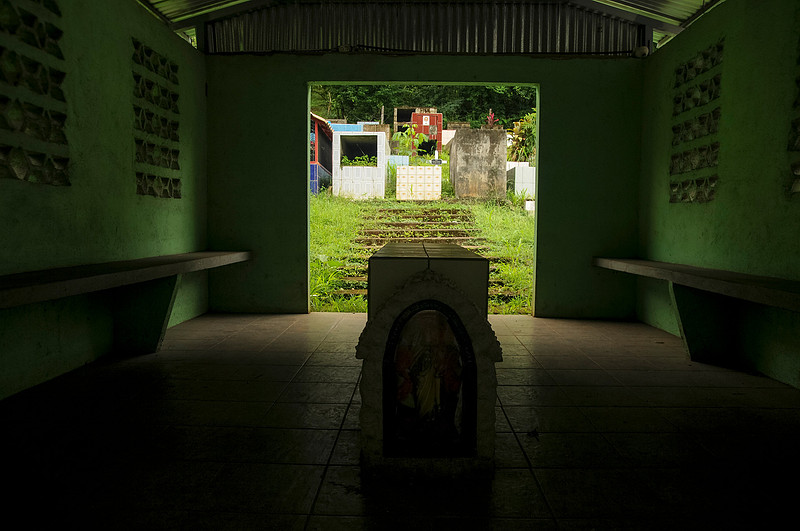
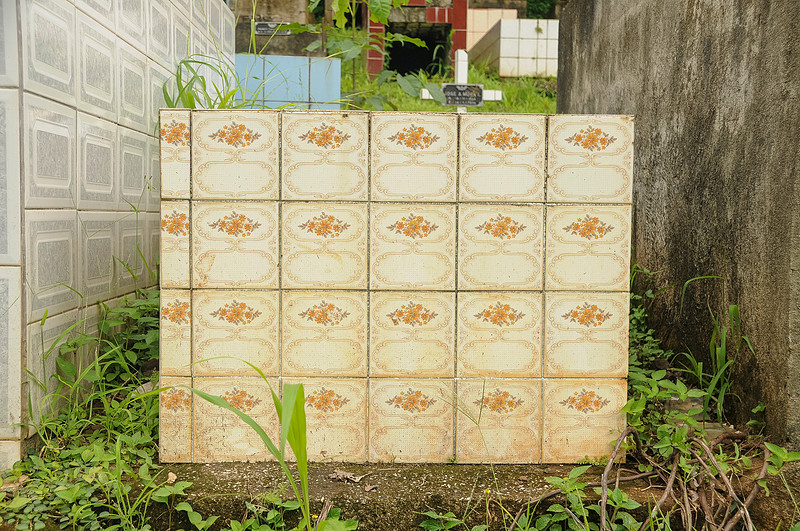
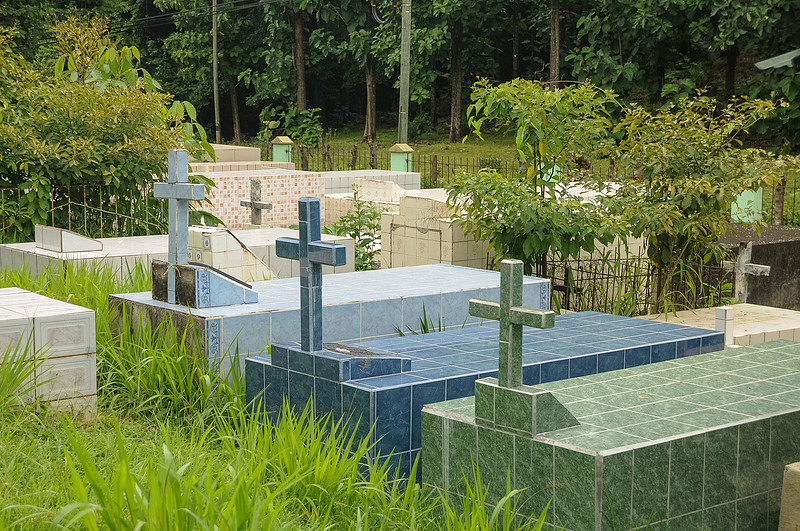
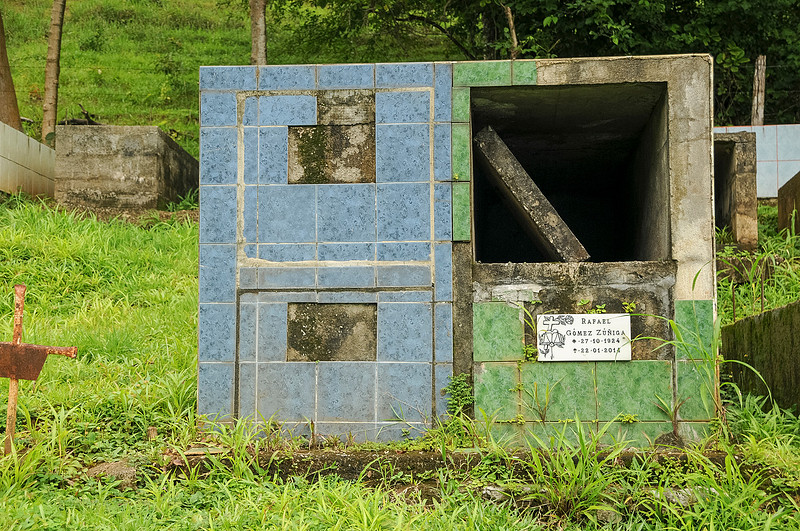
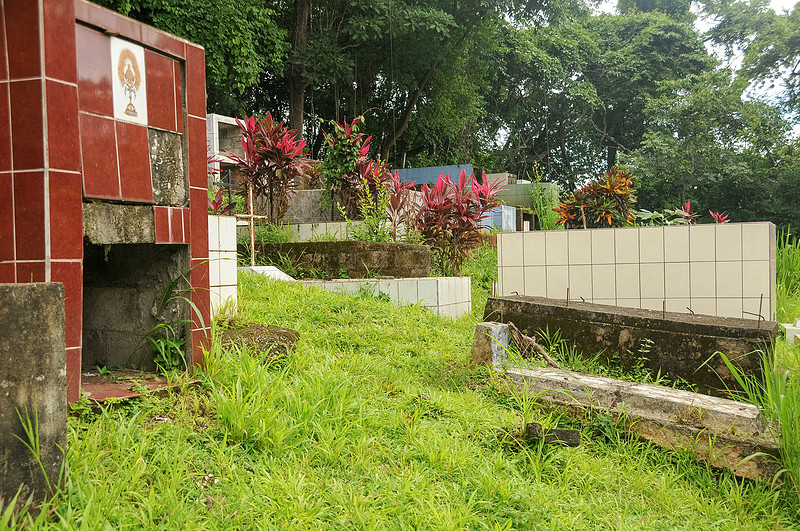
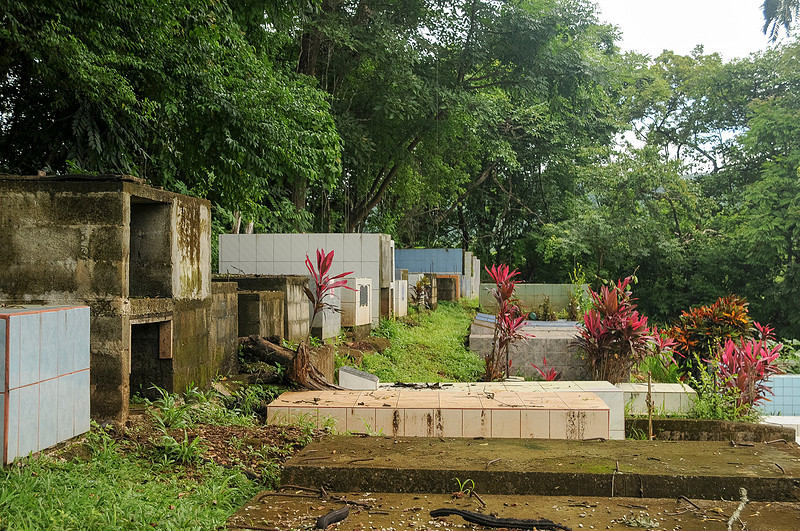
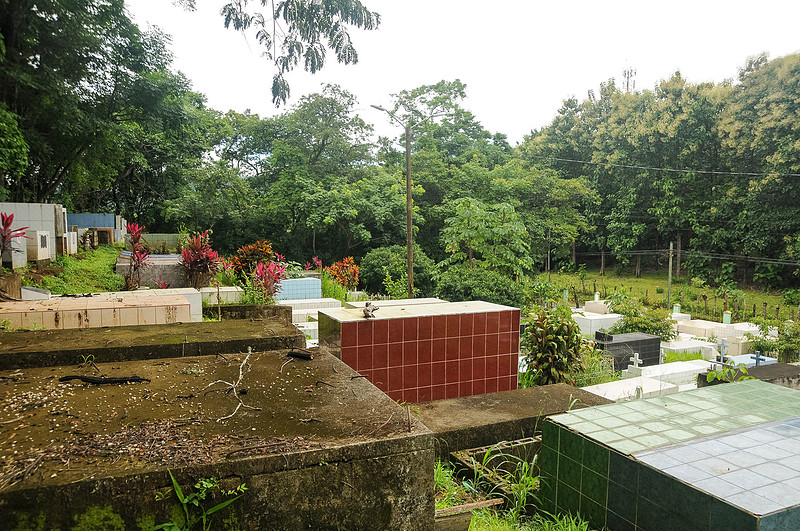
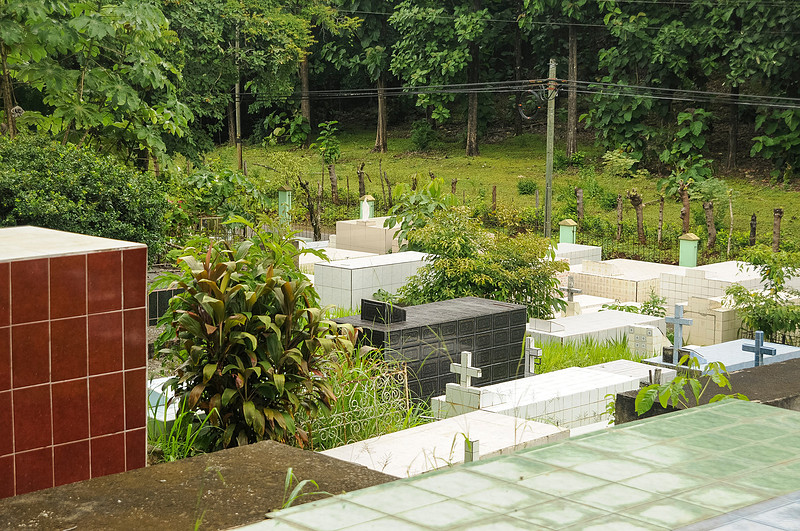
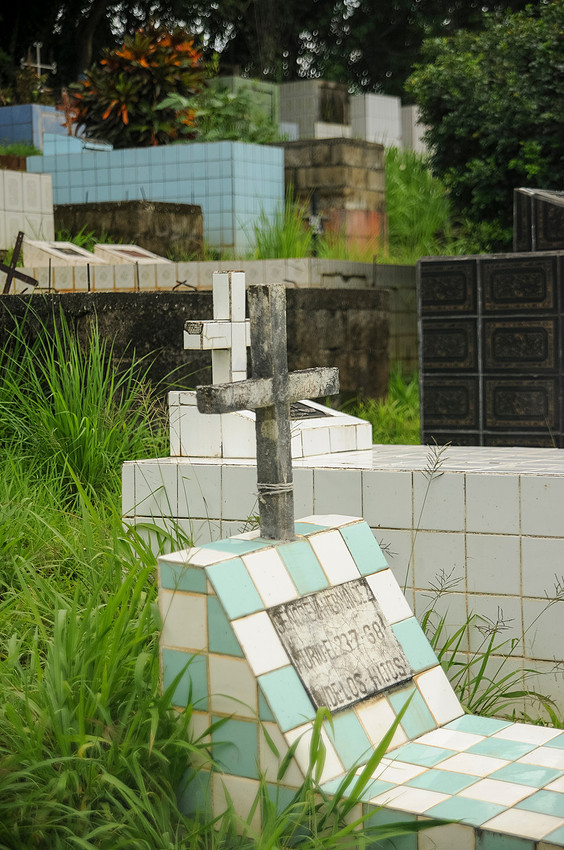
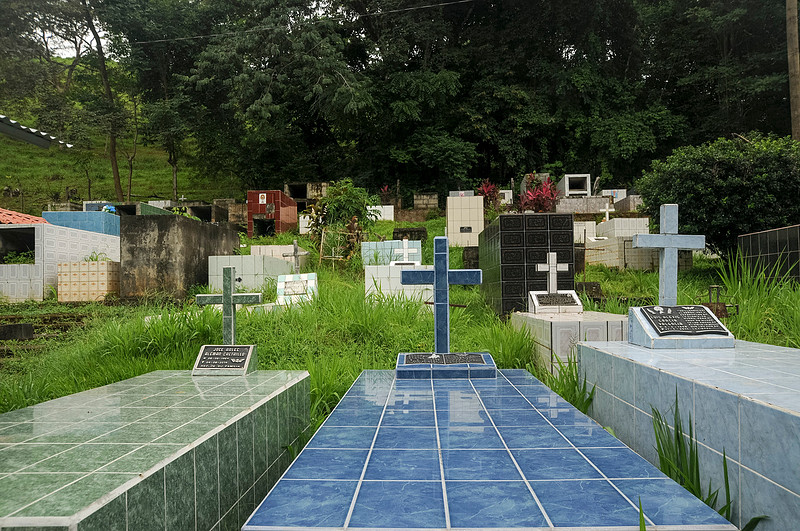
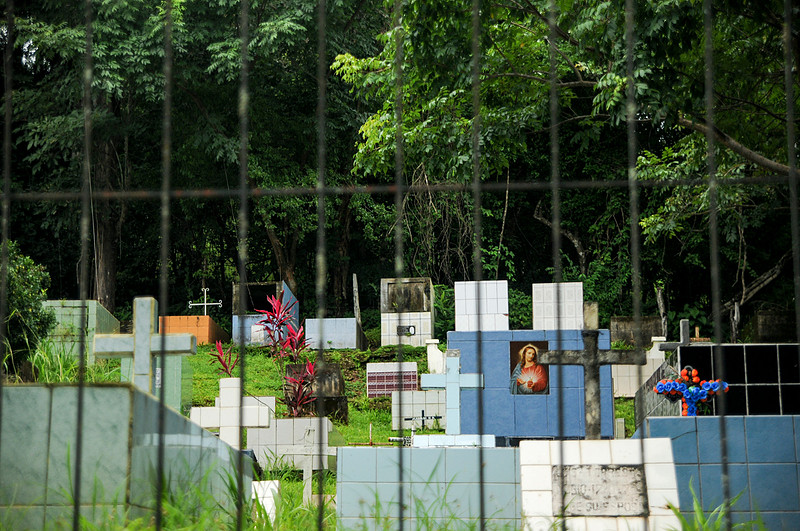
Cemeteries of Costa RicaWe visited a couple of cemeteries while road tripping through the country. The first one was in La Fortuna. You can see the most of the tombs are made from tiles.
I know it is not everybody's cup of tea but Shane and I really enjoy exploring cemeteries together when we travel. I have been always drawn to them but having a husband who is into some of your more bizarre hobbies is pretty amazing.
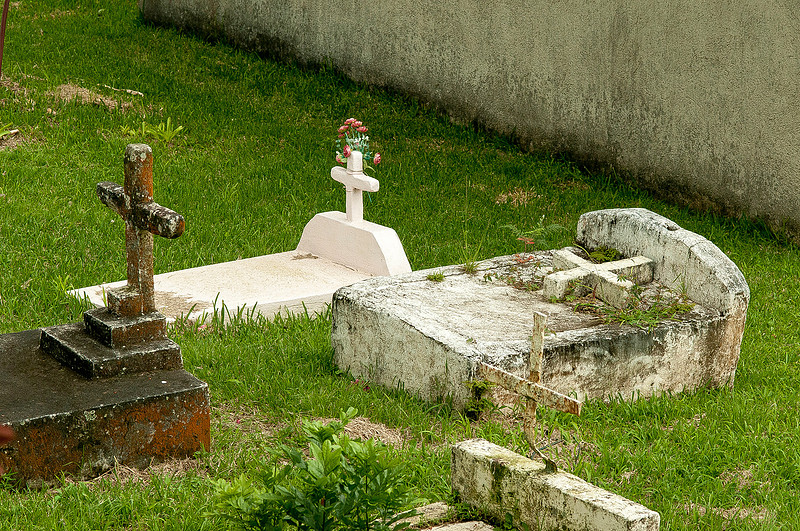
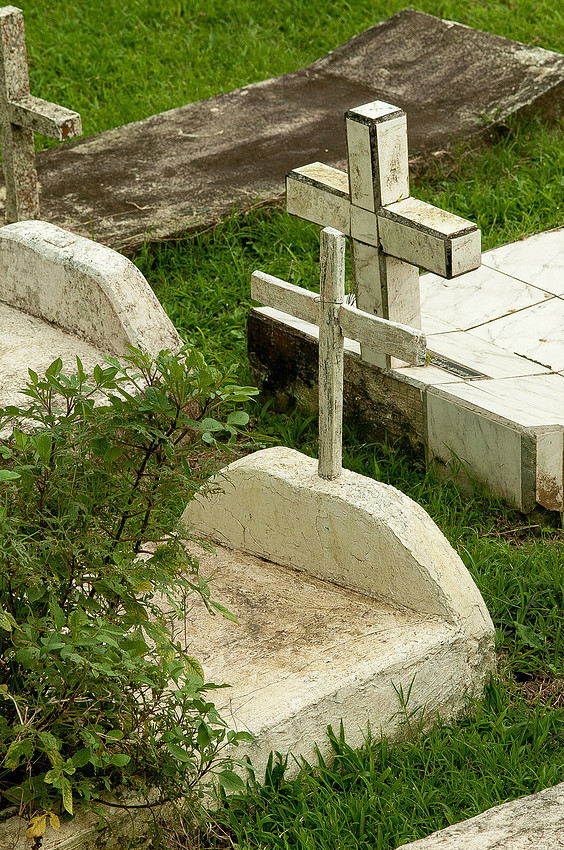
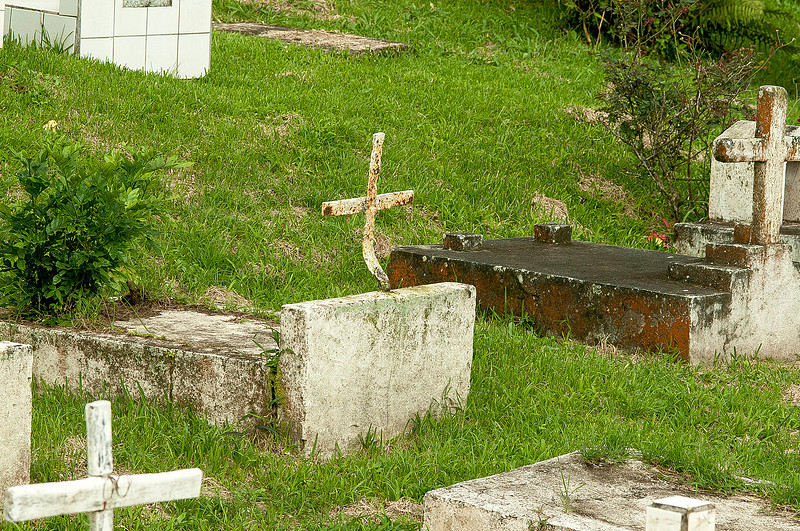
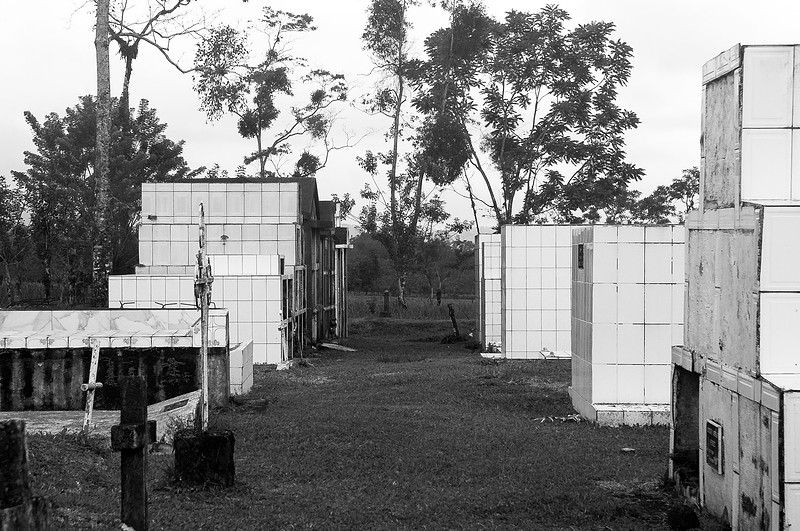
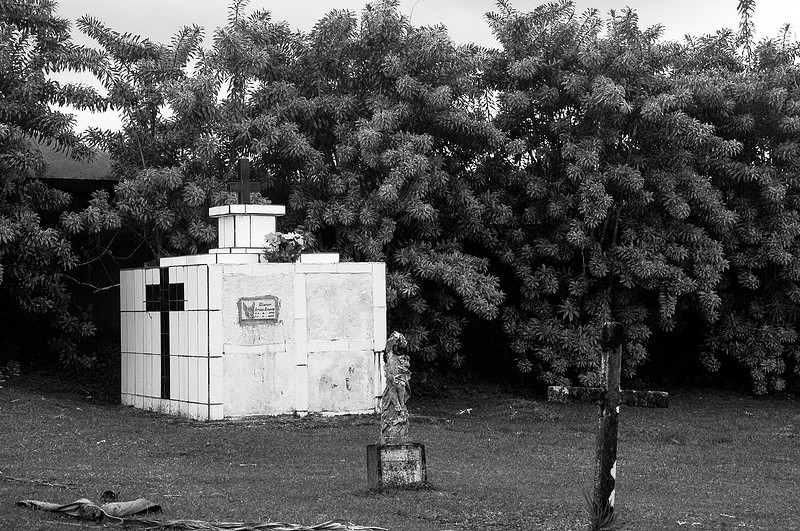
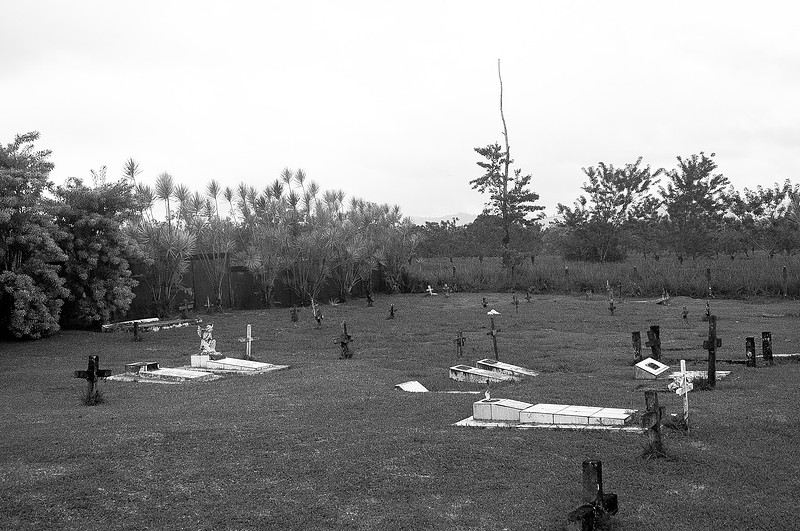
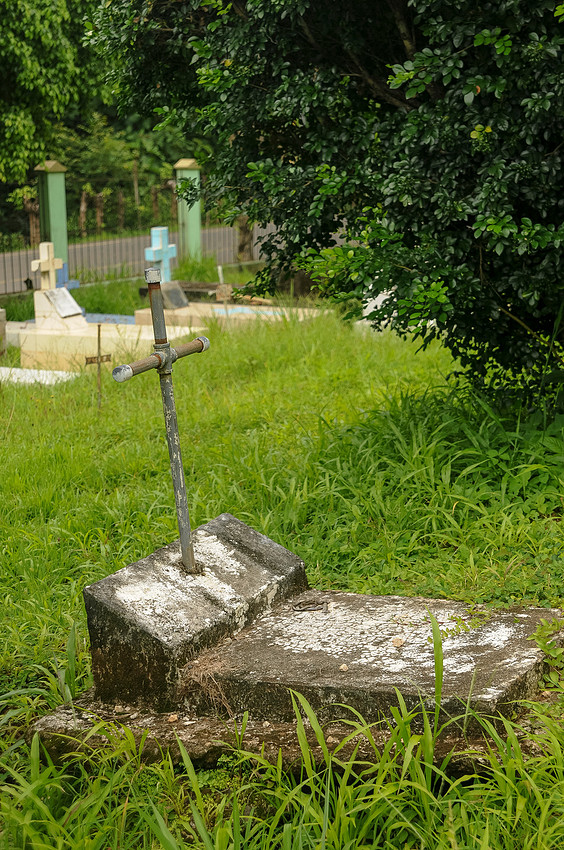
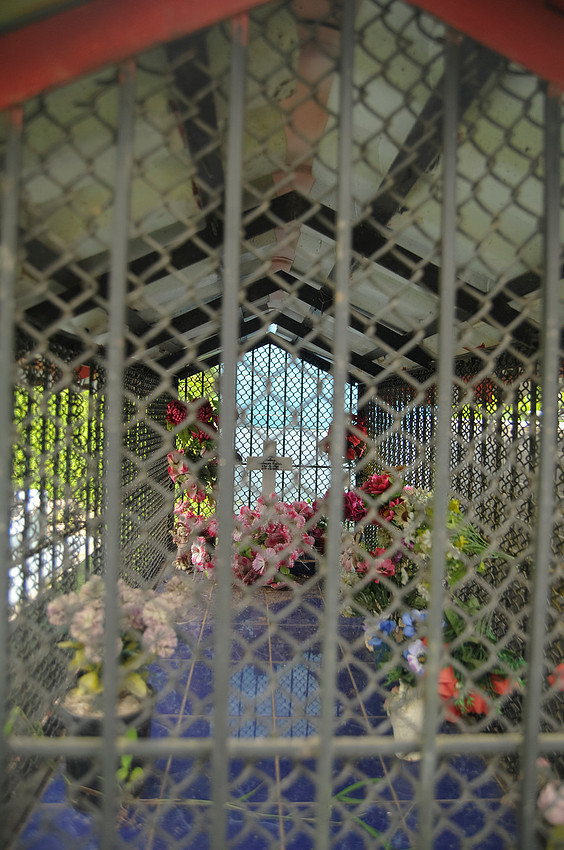
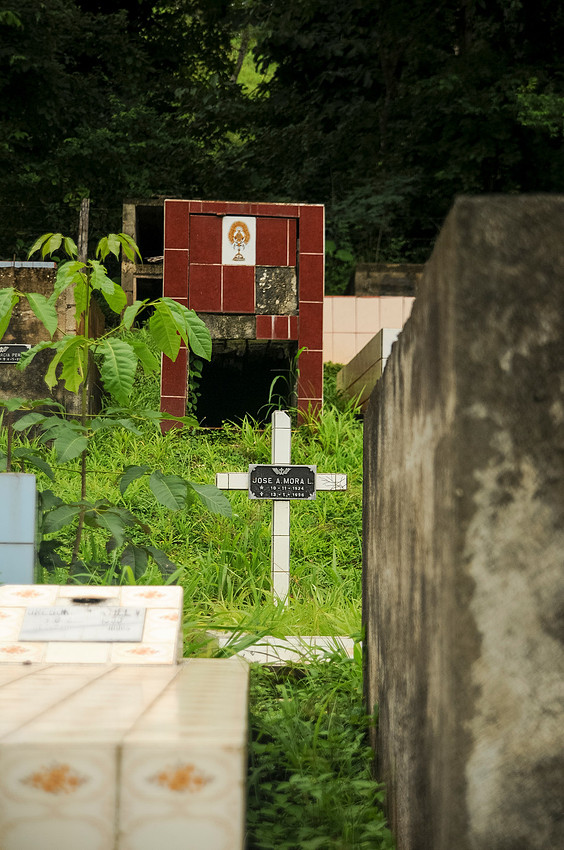
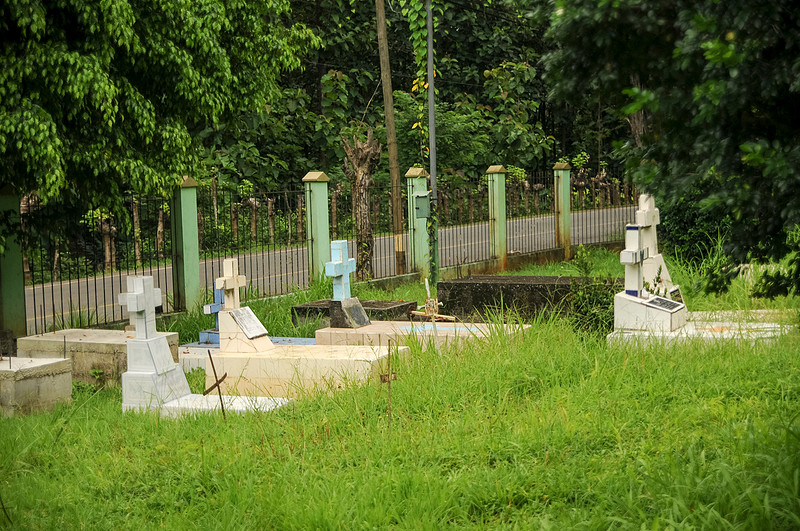
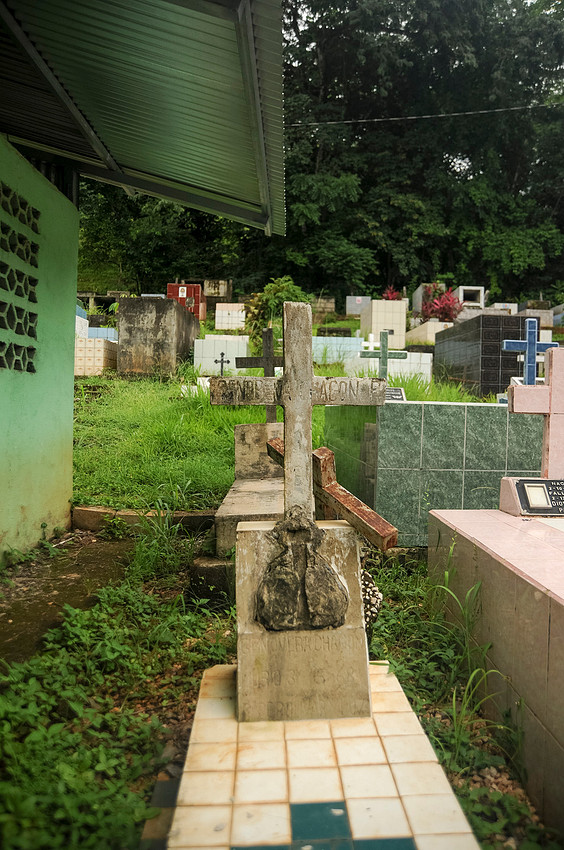
Some grave markers were simple wooden or cement crosses.
When I was little I wanted to be buried in a mausoleum. When I was a teenager I thought about becoming a mortician. Now, after reading Stiff by Mary Roach, I am not so sure about it all. I am torn between donating my body to science and donating my organs and being buried and turned into a tree (if and when that becomes a thing).
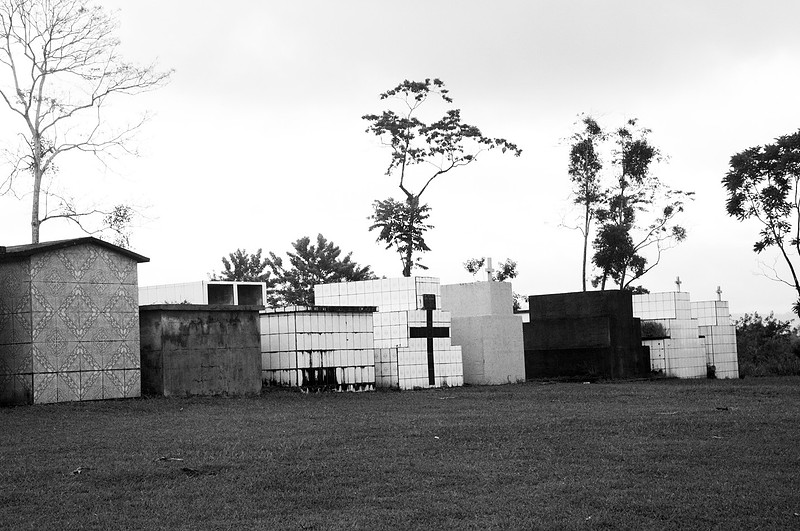
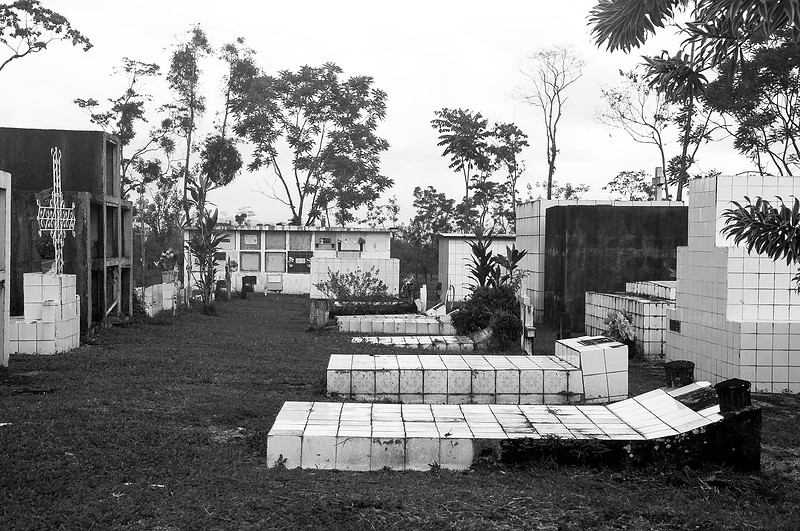
Sometimes Black + White does more justice to a graveyard than color ever could.
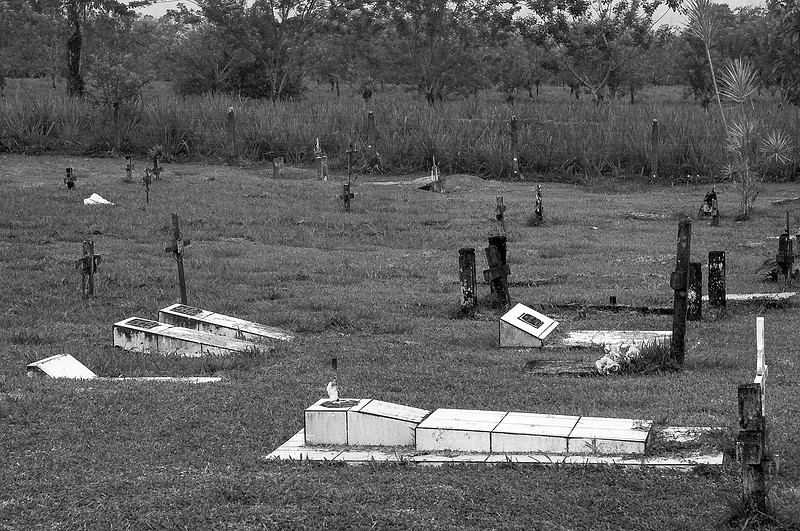
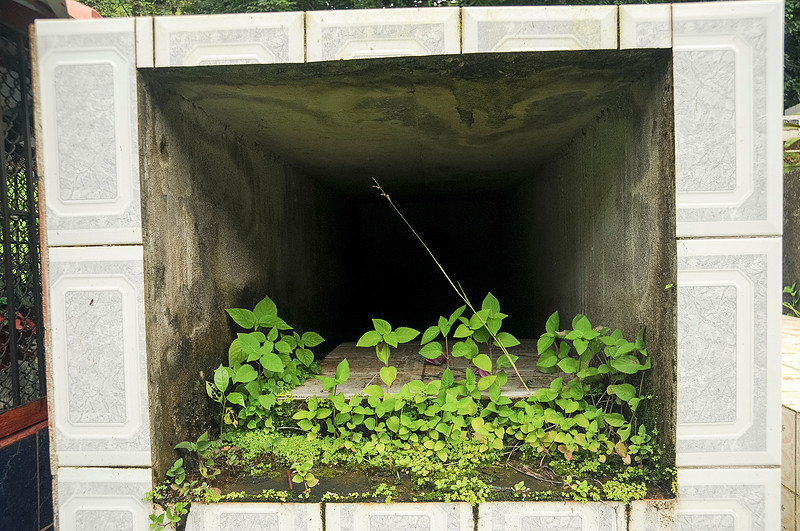
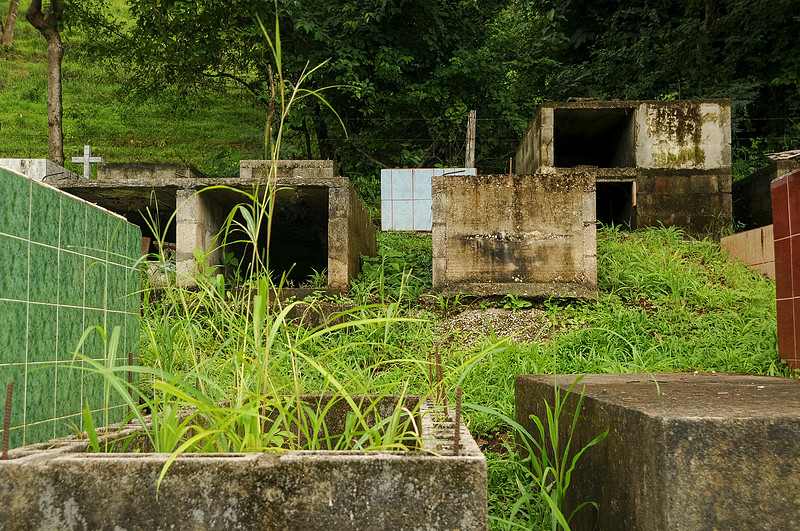
I was also able to cross of exposed human remains from my cemetery bucket list!
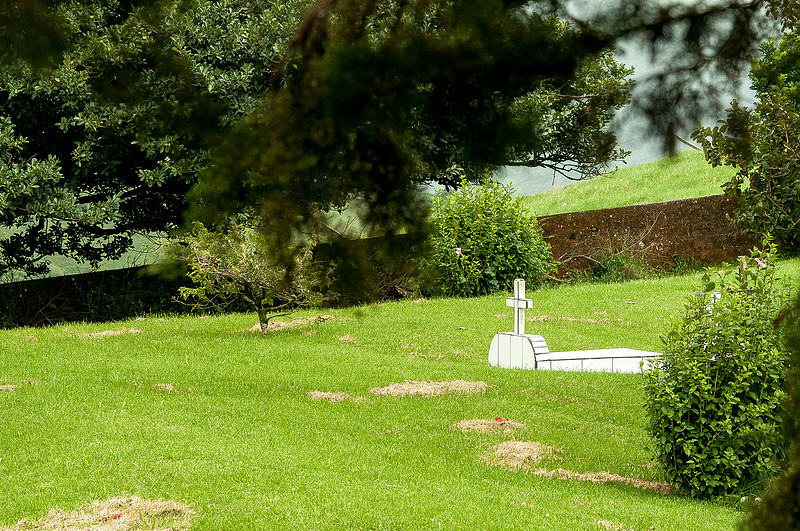
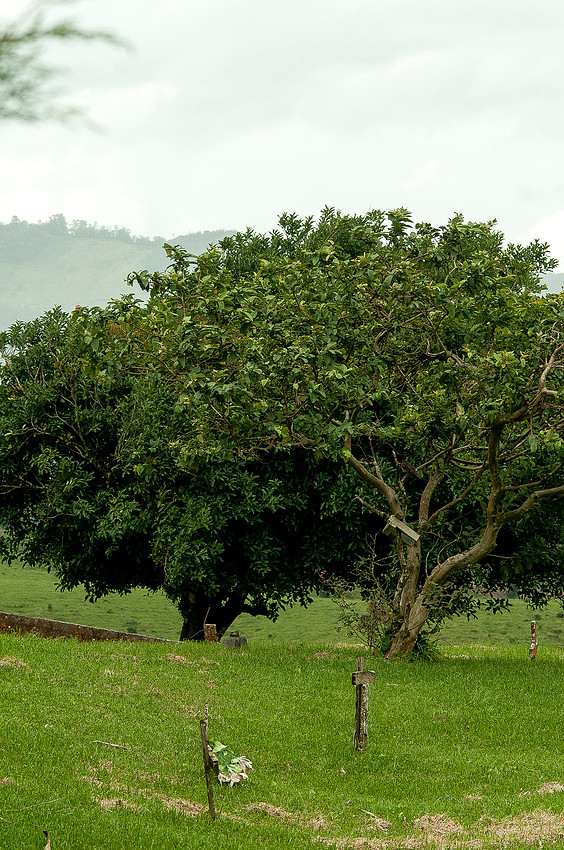
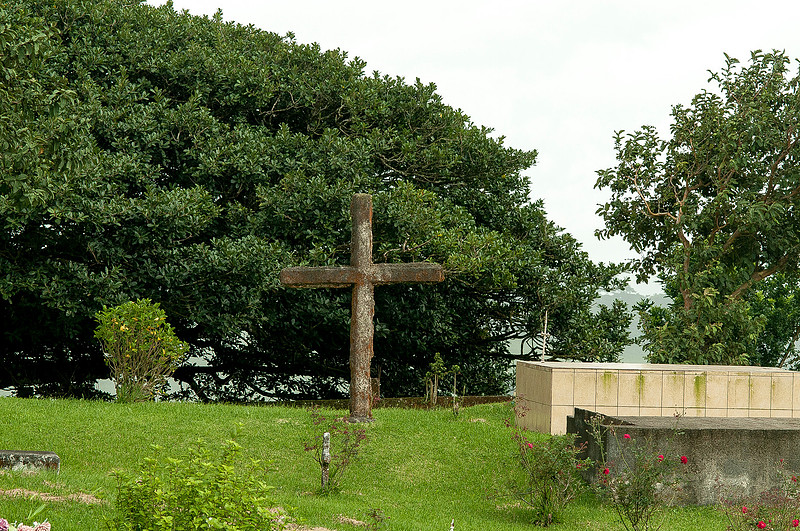
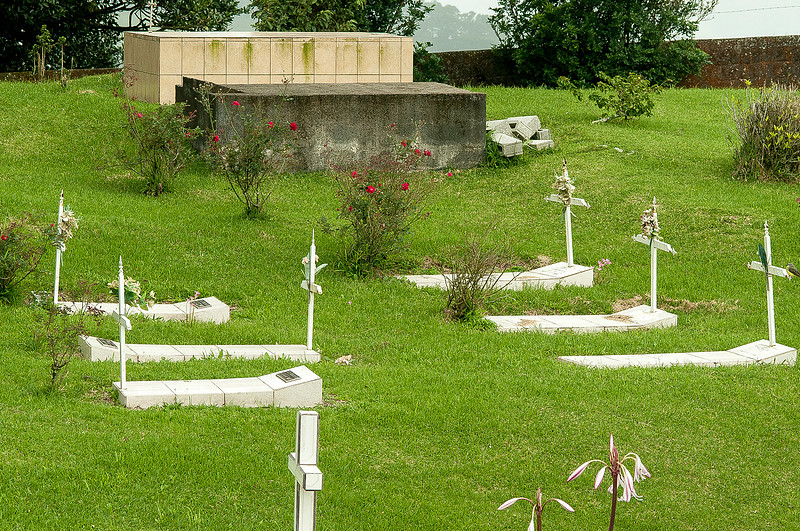
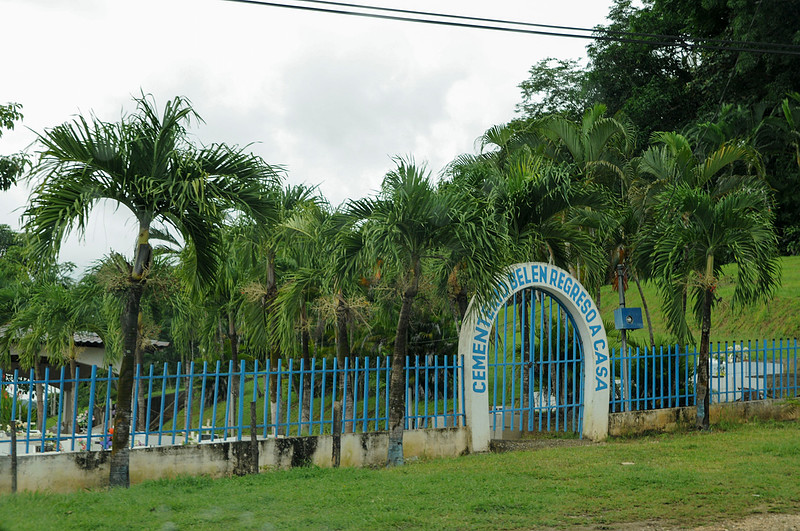
This second cemetery was stopped by on the way to Samara was by far in my top 3 most favorite cemeteries ever! Poor Shane did not even get out of the car. He was too freaked out by the bullet ants and snakes to trek through the over growth to explore the grounds with me. When I told him I saw exposed remains he was kicking himself. I managed to escape with no flesh wounds.
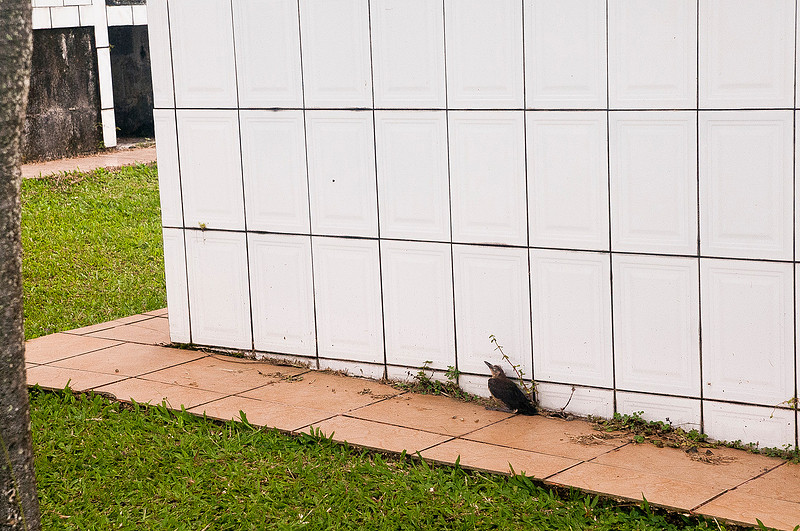
When someone dies in Costa Rica, the process begins almost immediately and people from all around receive the news almost at warp speed, because there is no embalming process. If the deceased has relatives that live far away, they may miss the funeral all together since usually people are buried no later than the day after they have died. The undertaker will prepare the body with formaldehyde. Most funerals smell very strongly of this mixed with the smell of decomposing flesh, which is rather unpleasant. Usually when the body is returned, the family and close friends have a viewing service they call a "vela". The next day or within the next few hours the body is usually sent to a church as most Costa Ricans are pretty religious where the deceased has a mass held in their name. After the mass the funeral train begins. Honestly, it looks like a scene out of any Latin American movie; the long black hearse car covered in flowers with a trail of people dressed all in black crying slowly, walking behind it. As it rains frequently in Costa Rica, there is usually a procession of black umbrellas too. The train stops at the local cemetery where the deceased person's family usually has a communal family burial box that they have been paying for. This is something really crazy about Costa Rican funerals. Some families only have one box, so if grandma died last month and grandpa dies the following year, they take her remains out, put them in a bag, and put them back in with grandpa's body. Usually just the body is placed in these slots without the coffin. Some of the burial boxes are above ground cement structures, that are usually tiled in white ceramic tiles. There are usually four separate holes, but people from other families might be renting the other spots. They are not well marked with names unless the family is very wealthy and has a whole statue and structure with the name plates made up. Other bodies are actually buried in the ground in the box. 
Comments |
Subscribe
RSS
Archive
January
February
March
April
May
June
July
August
September
October
November
December
|