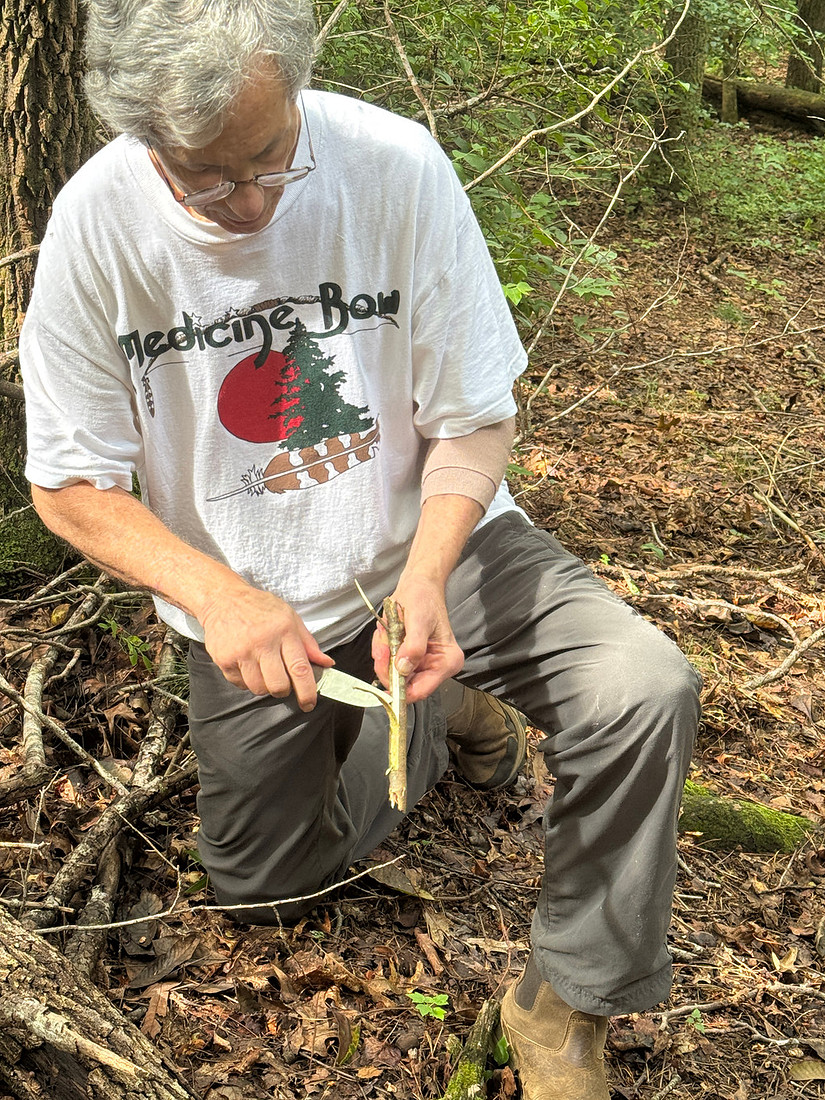
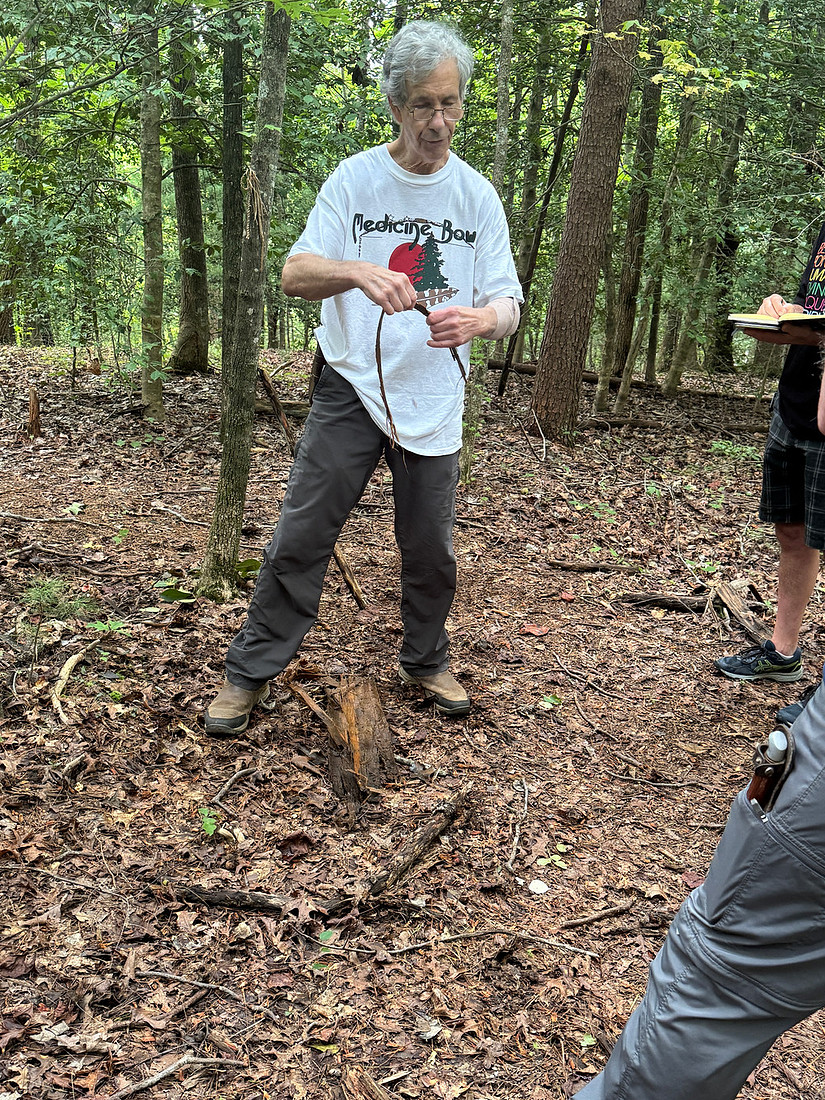
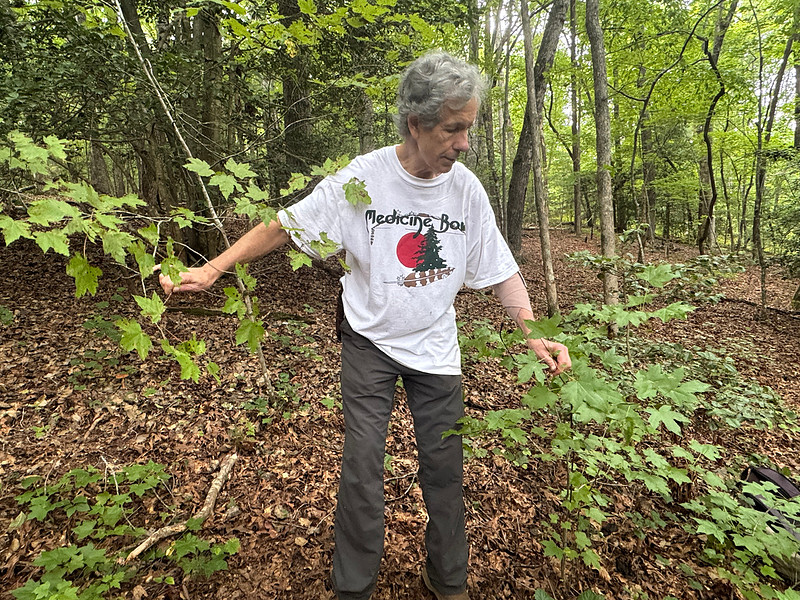
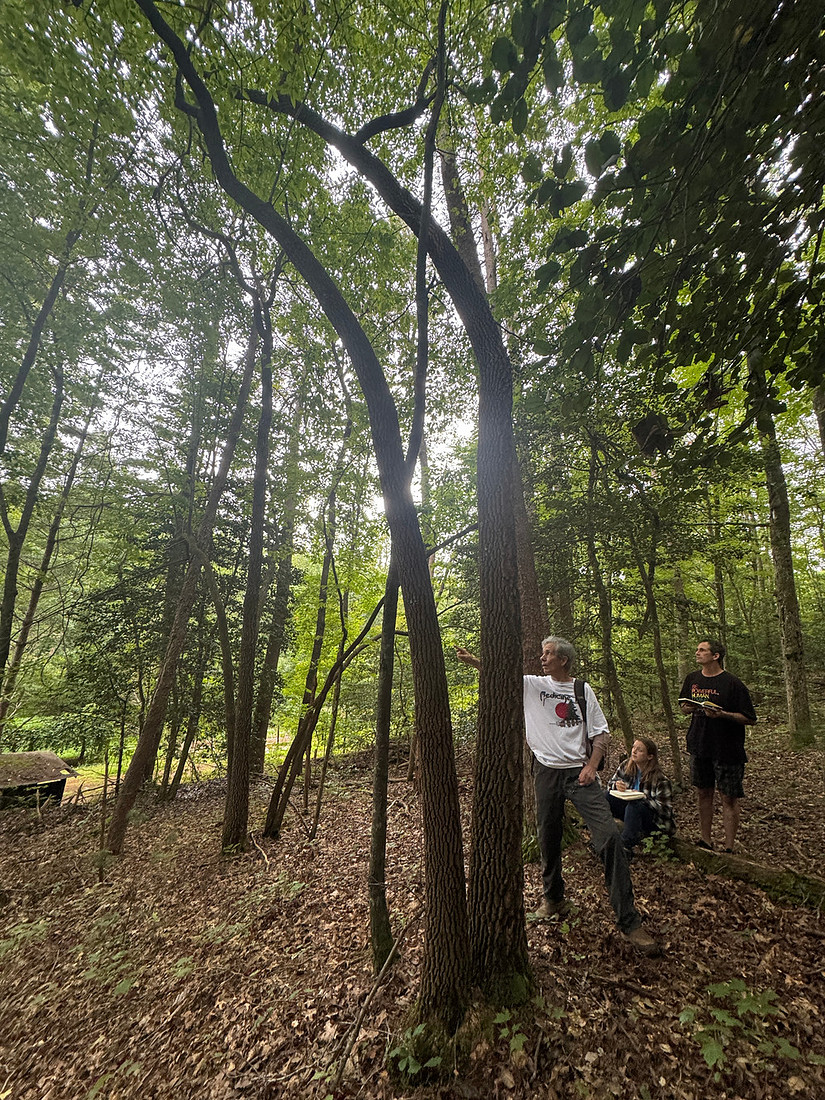
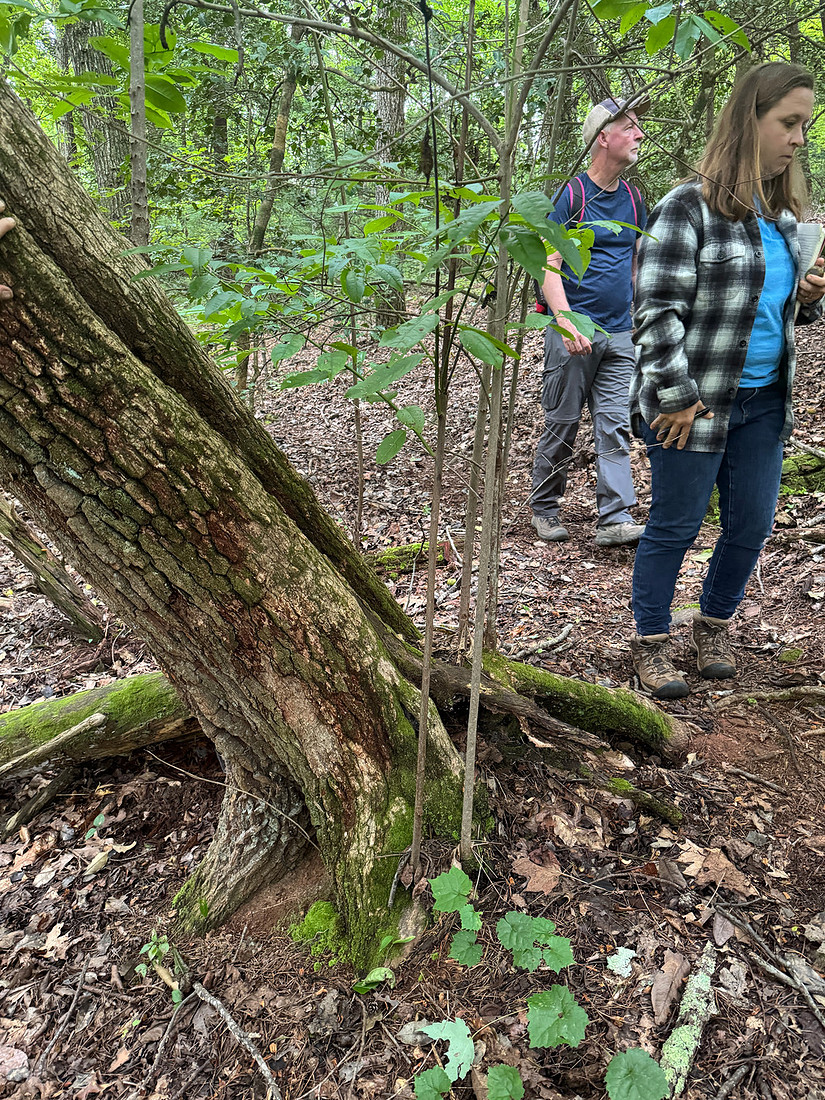
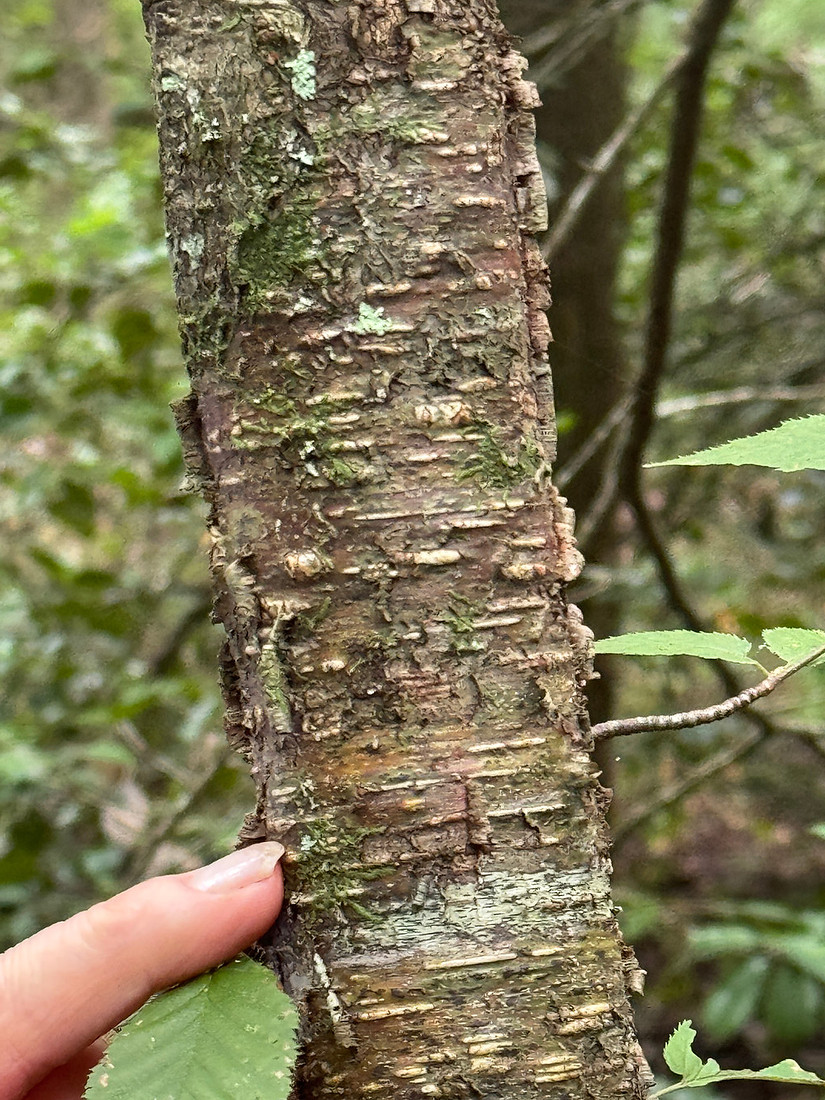
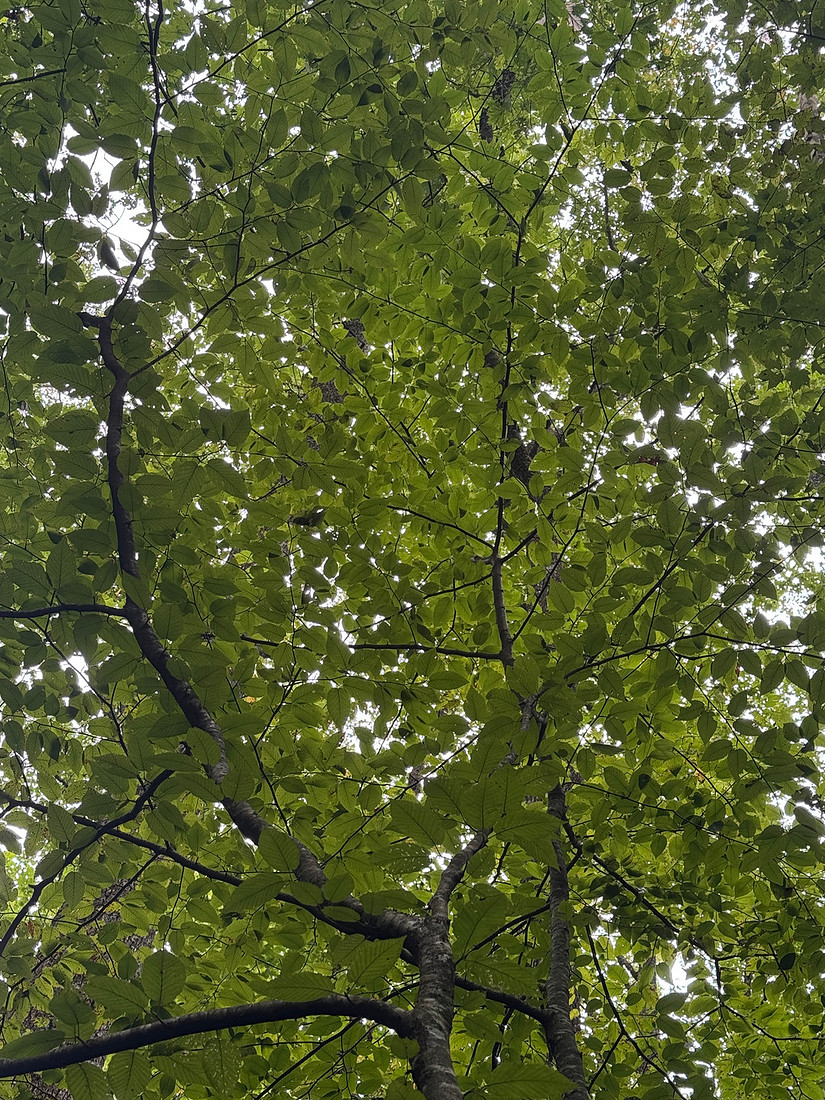
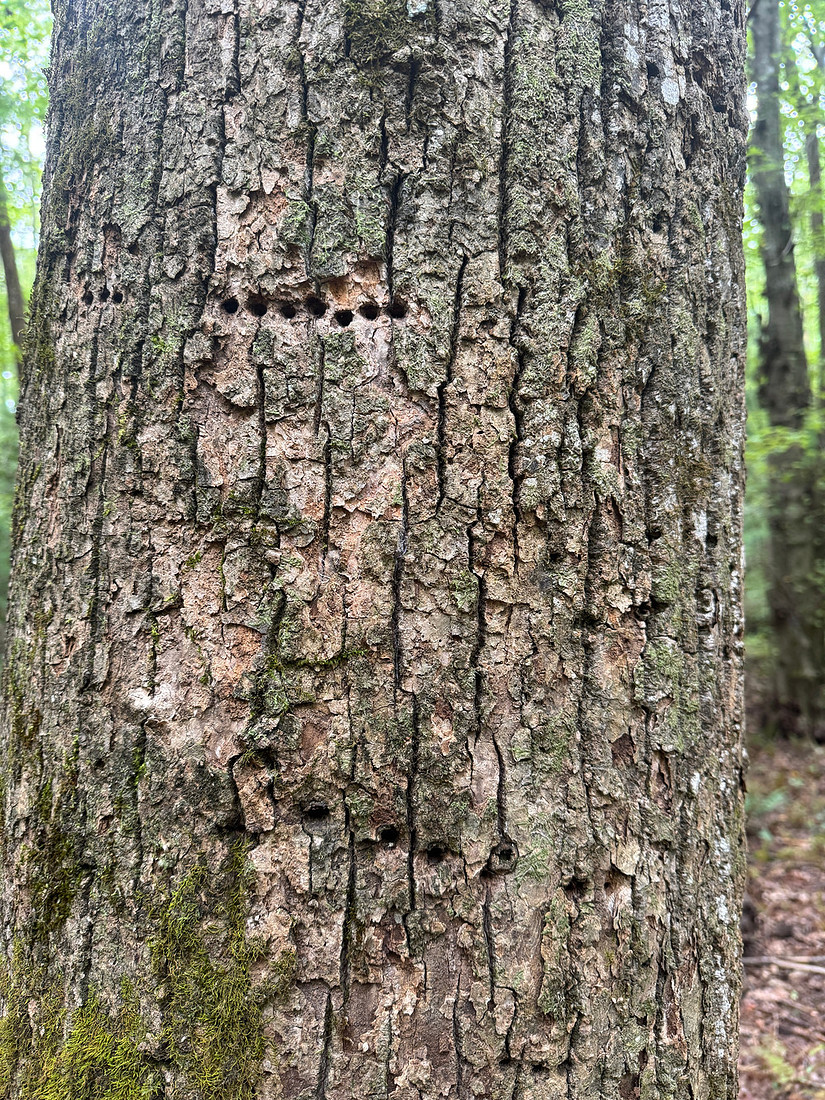
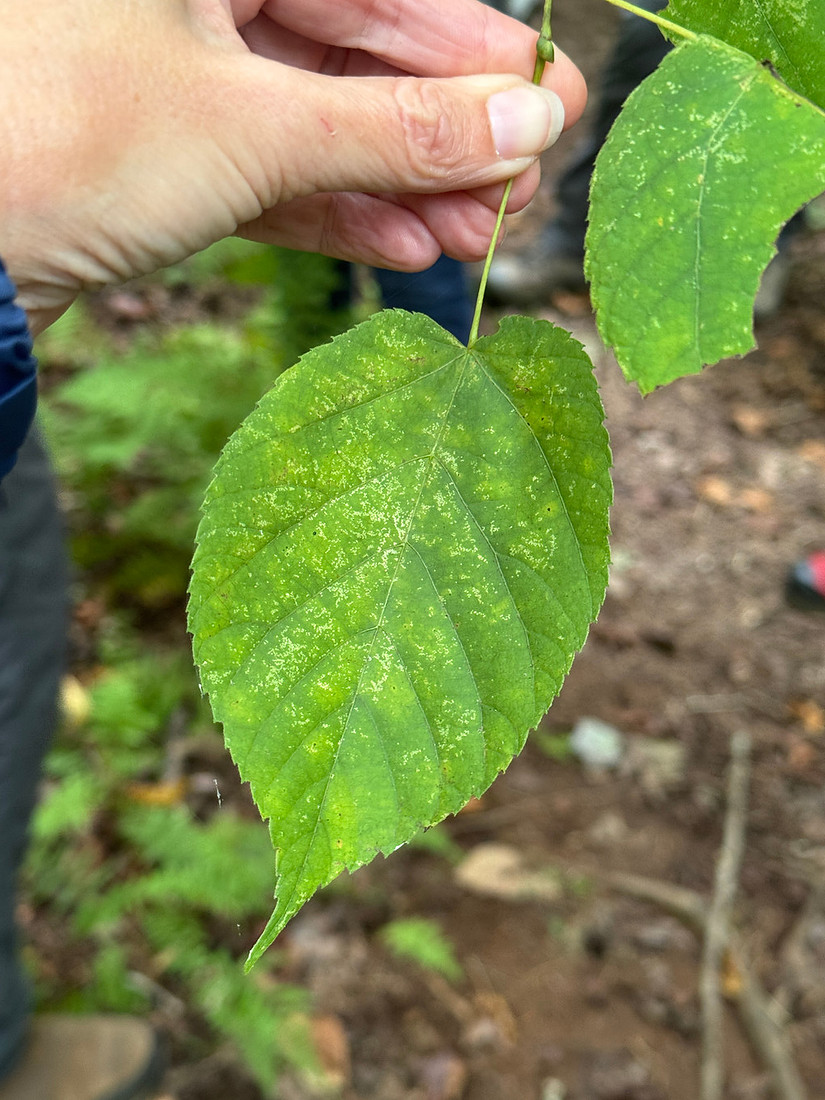
Summer Trees - Medicine Bow Wilderness SchoolThis will be my sixth class I have attended at Medicine Bow taught by Mark Warren. He teaches survival skills used by Native Americans. With each class I am inspired and I have learned way more, hands on than I expected going in. The entire class is taught outdoors on his 35 acre property up in the North Georgia mountains surrounded on 3 sides by National Forest. The first class I attended was Fall plant identification. That description does not do it justice. It was so much more than that. Each class has a limit of 10 students to ensure as much hands and one on one time can be experienced. This last class was on Summer Trees. I wanted to organize and share what I learned for others and also so I can look back as a refresher.
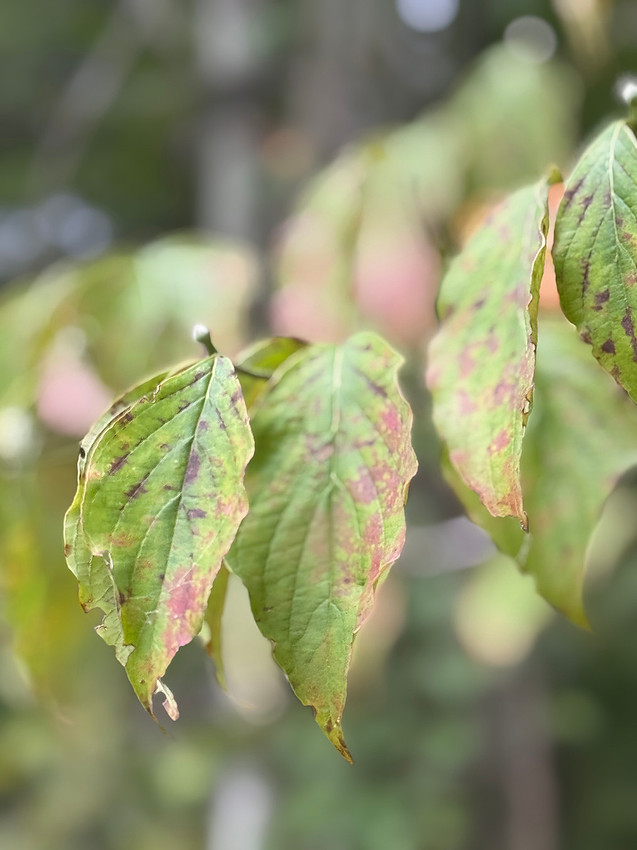
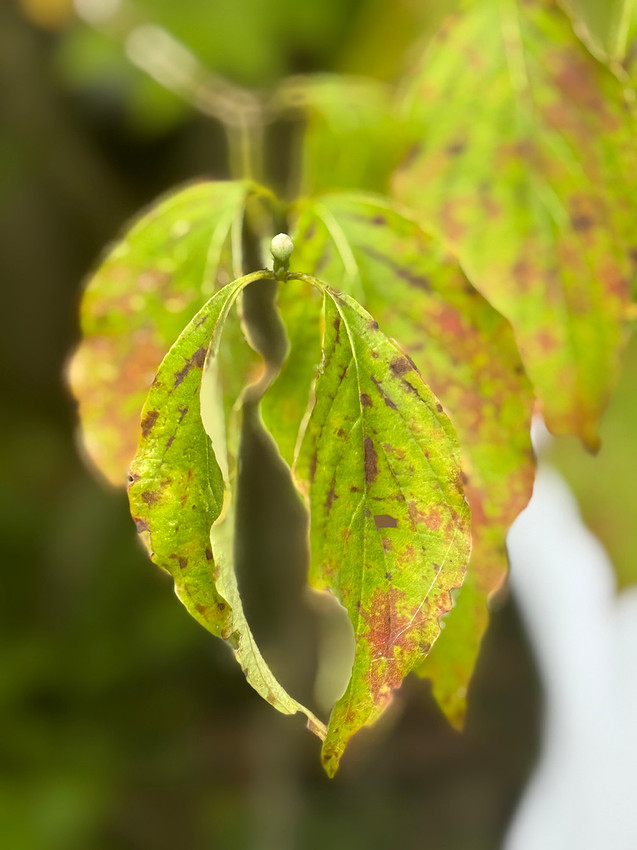
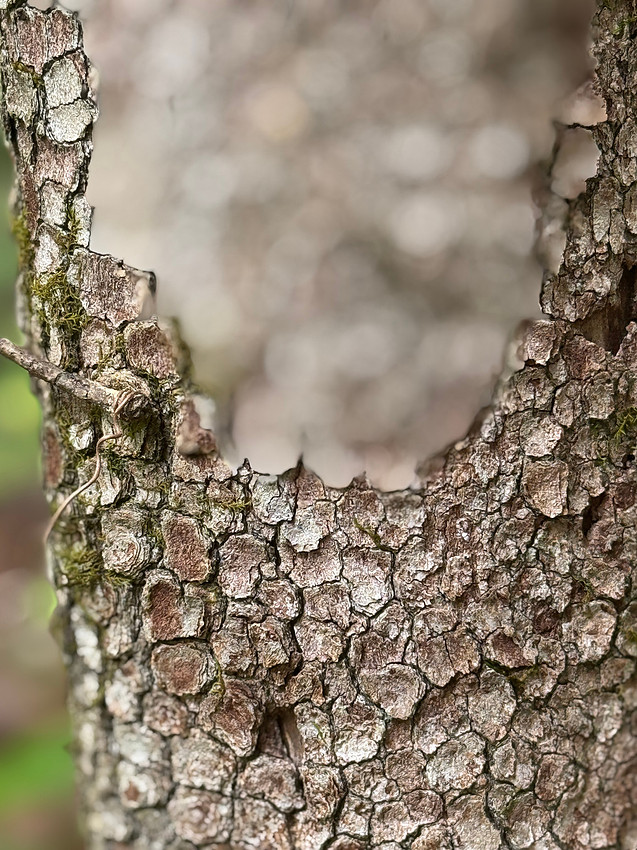
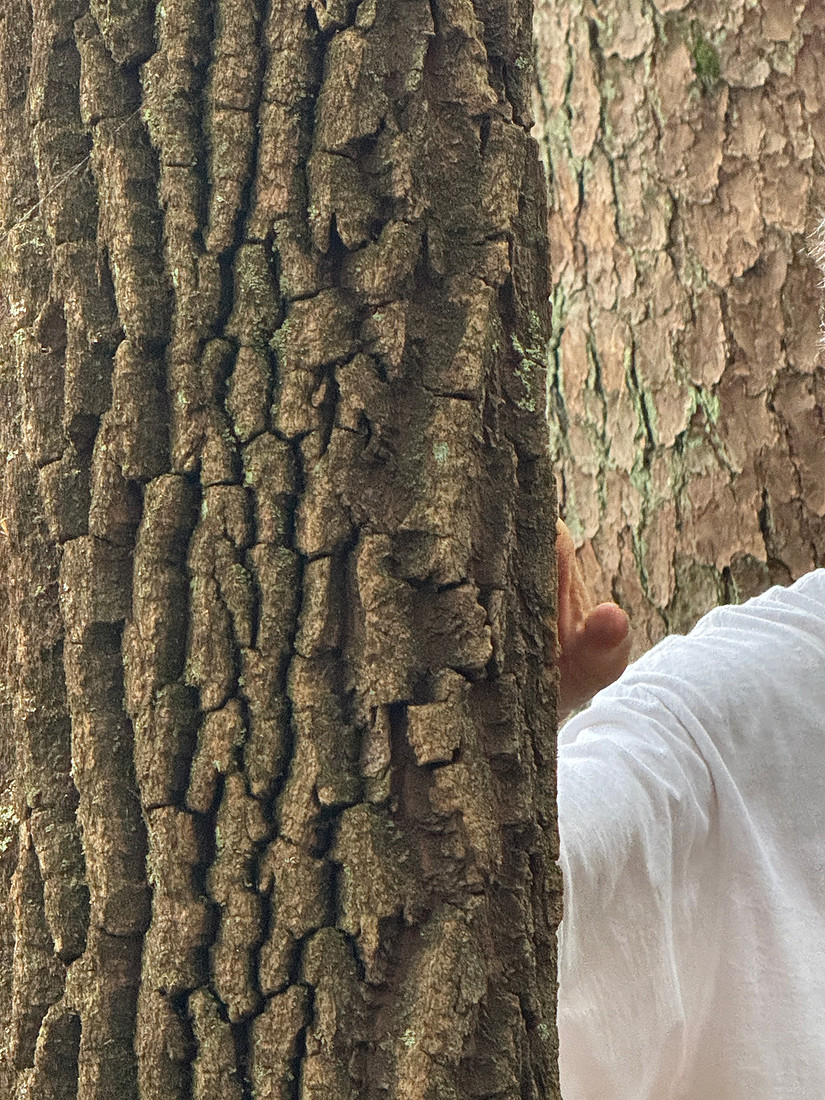
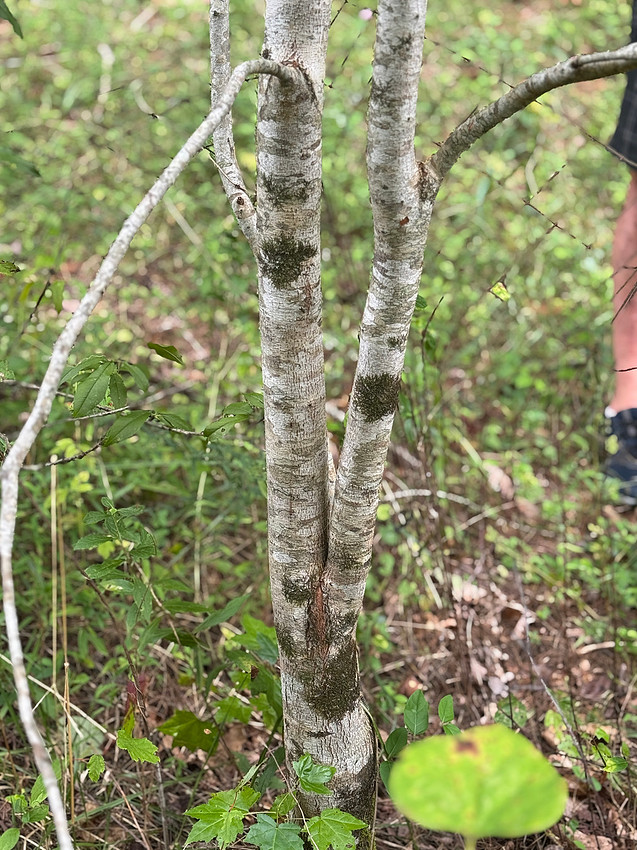
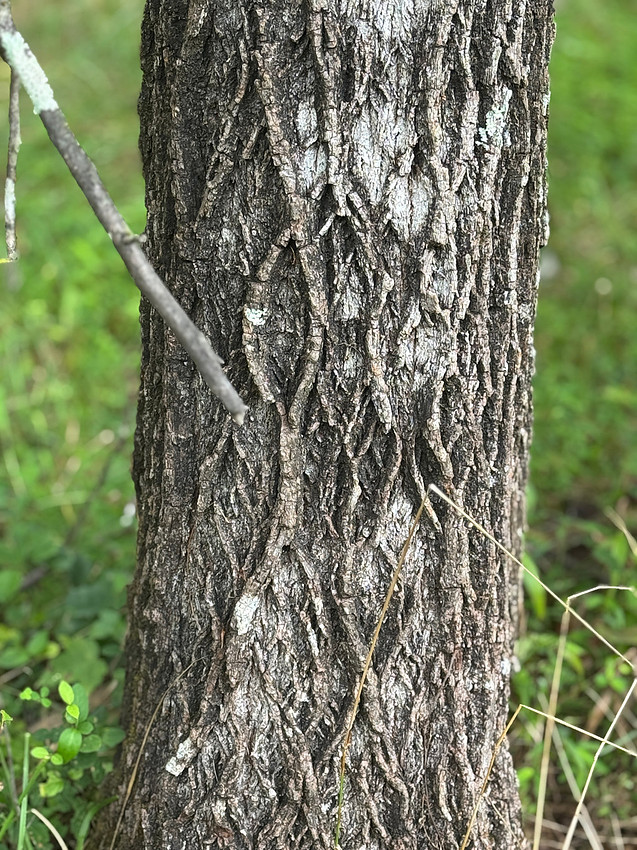
Above, the Dogwood tree. Reptilian Bark pattern and opposite leaves. Lateral veins do not reach the end of the leaf, branches arc upward. There is a fungus that is killing them off. Planting in full sunlight keeps the fungus away.
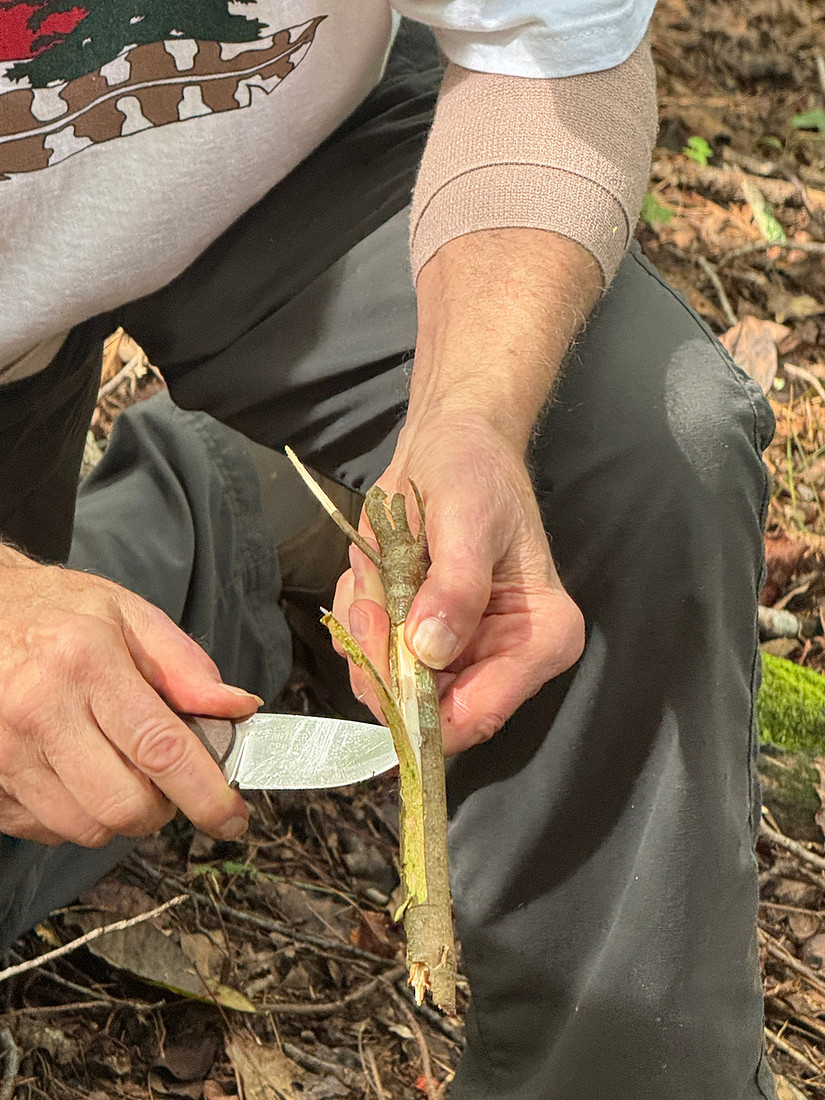
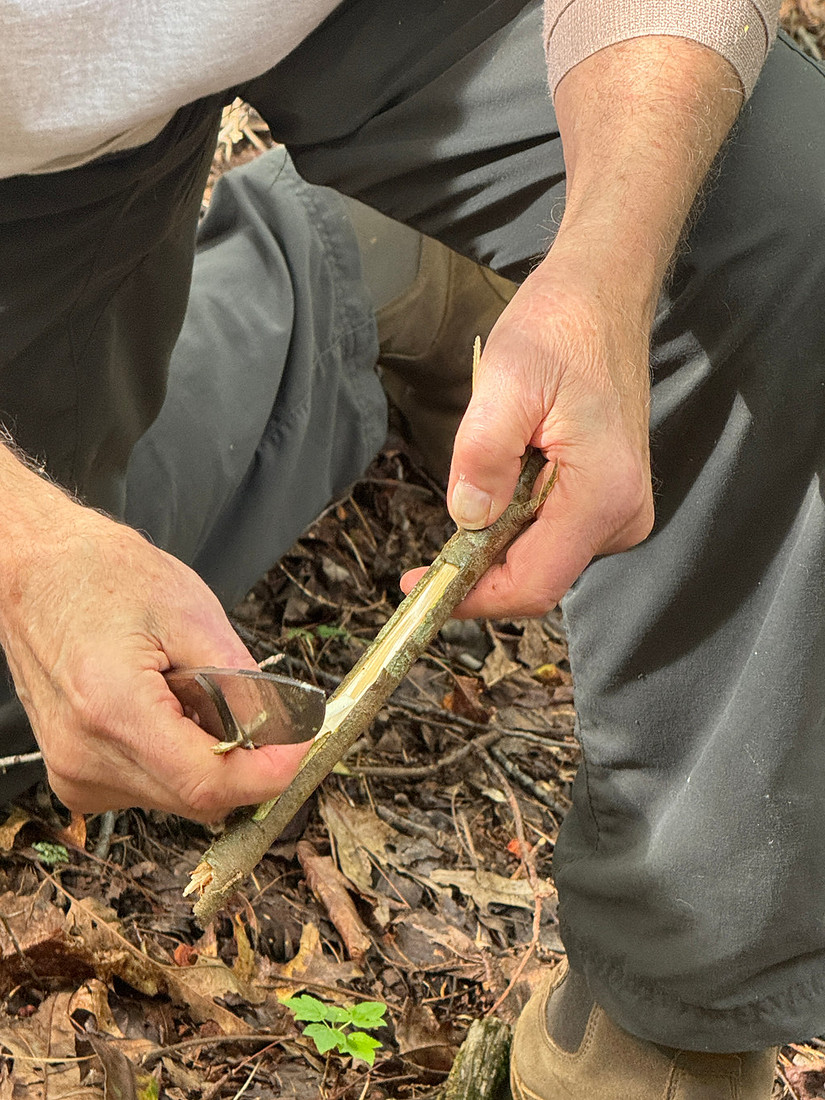
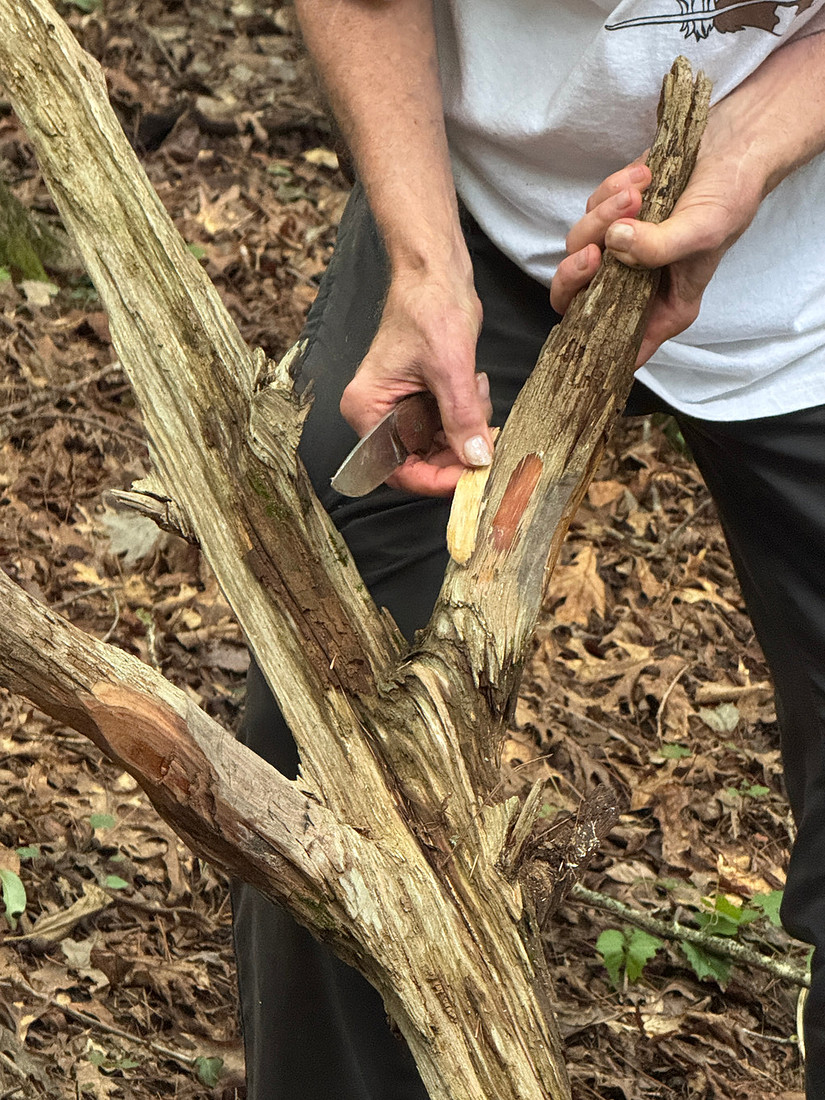
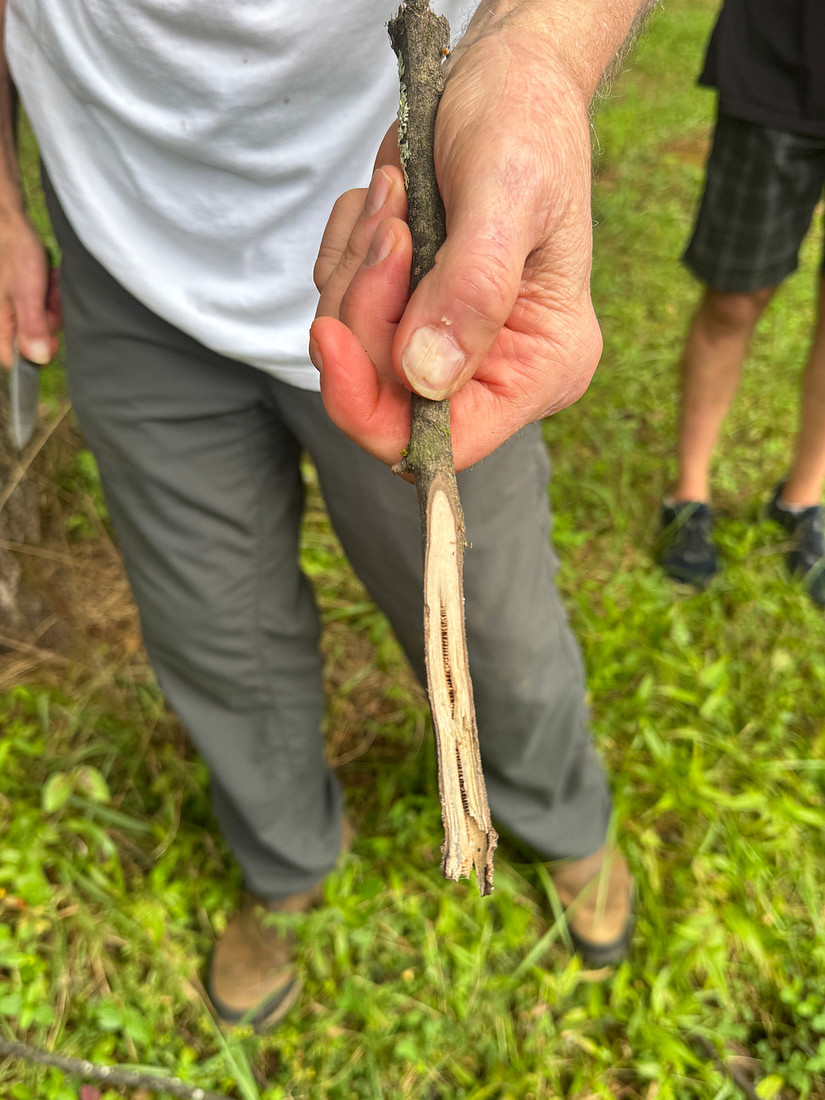
Never take from the truck of a tree, only from a branch. Also if you take from the branch, leave it attached to the tree and once finished cover with elmers glue to seal as to not kill the tree. A tea from the inner bark of the Dogwood can be made to cure a Migraine and reduce fever.
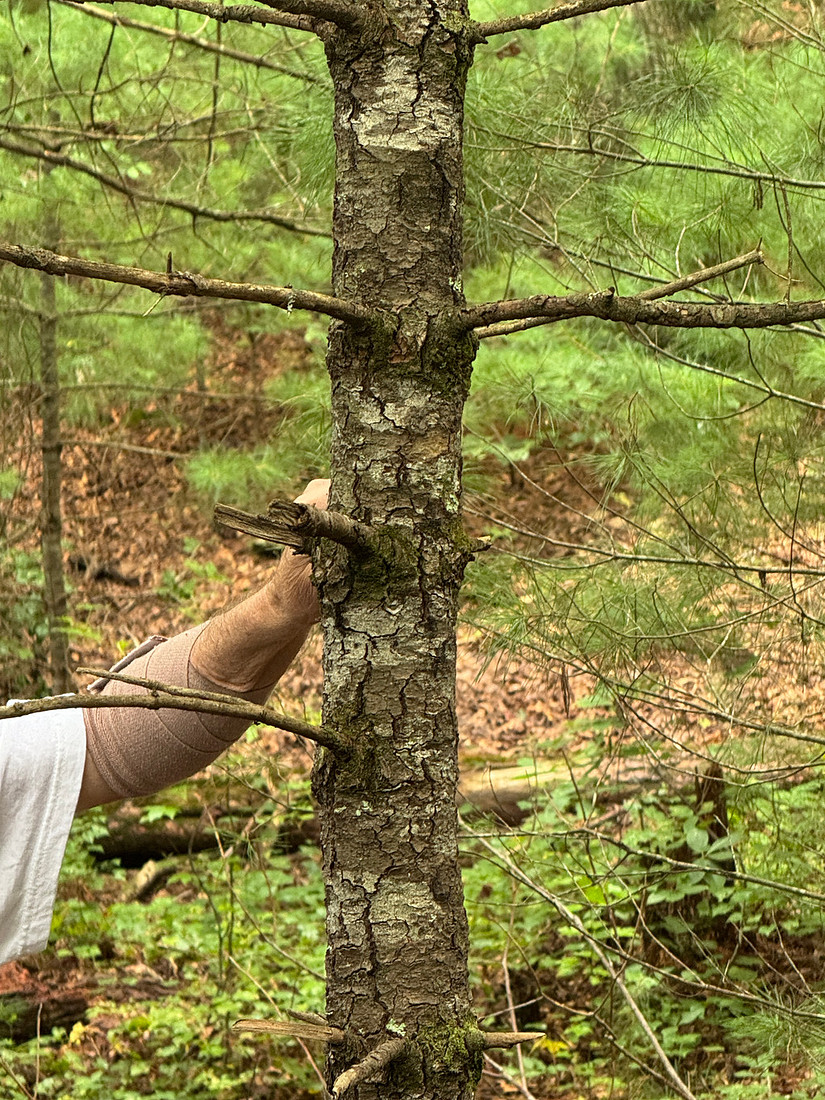
The White Pine, my favorite. The branches of this tree grow in whorls. It takes 7 years for the first whorl to grow and then one year for each after. counting the whorls will tell you the age of the tree. Needles are bundles together in sets of 5. The tree is full of Terpenes, which makes it excellent for kindling. The inner bark is full of phosphorus, iron, protein, fat, carbs, niacin, vitamins A & C and riboflavin. To ingest you must drive the Terpenes out by heating stones by the fire and laying them out on them to heat until you have an over cooked bacon like texture. You can soak for 3 hours in salted water to make pasta, or sun dry and grind into a flour. If you take the sap and heat to a liquid, add in hardwood ash, it will make an epoxy resin. You may also use the heated sap to remove stingers, splinters, glass, etc. Lastly if you drive out the Terpenes you can steep in water and make an expectorant tea.
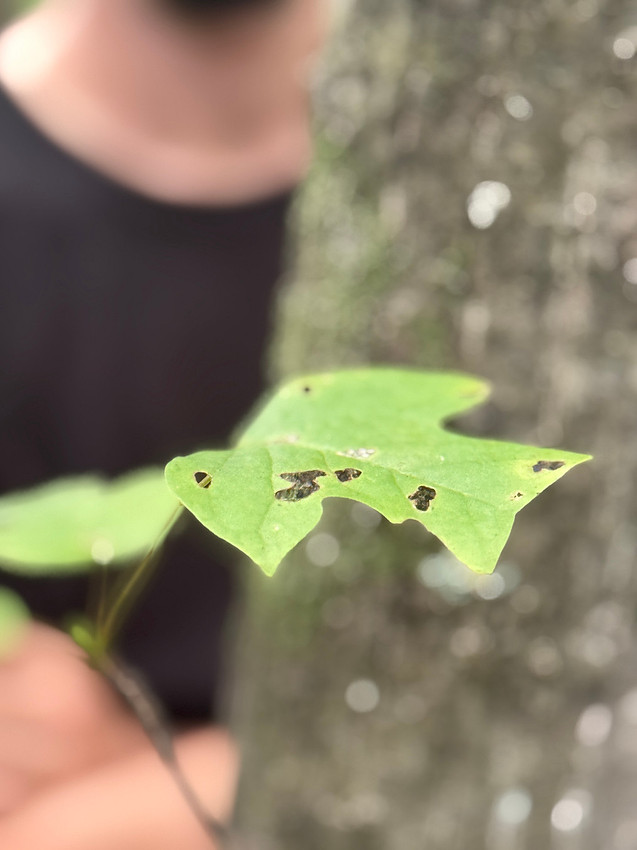
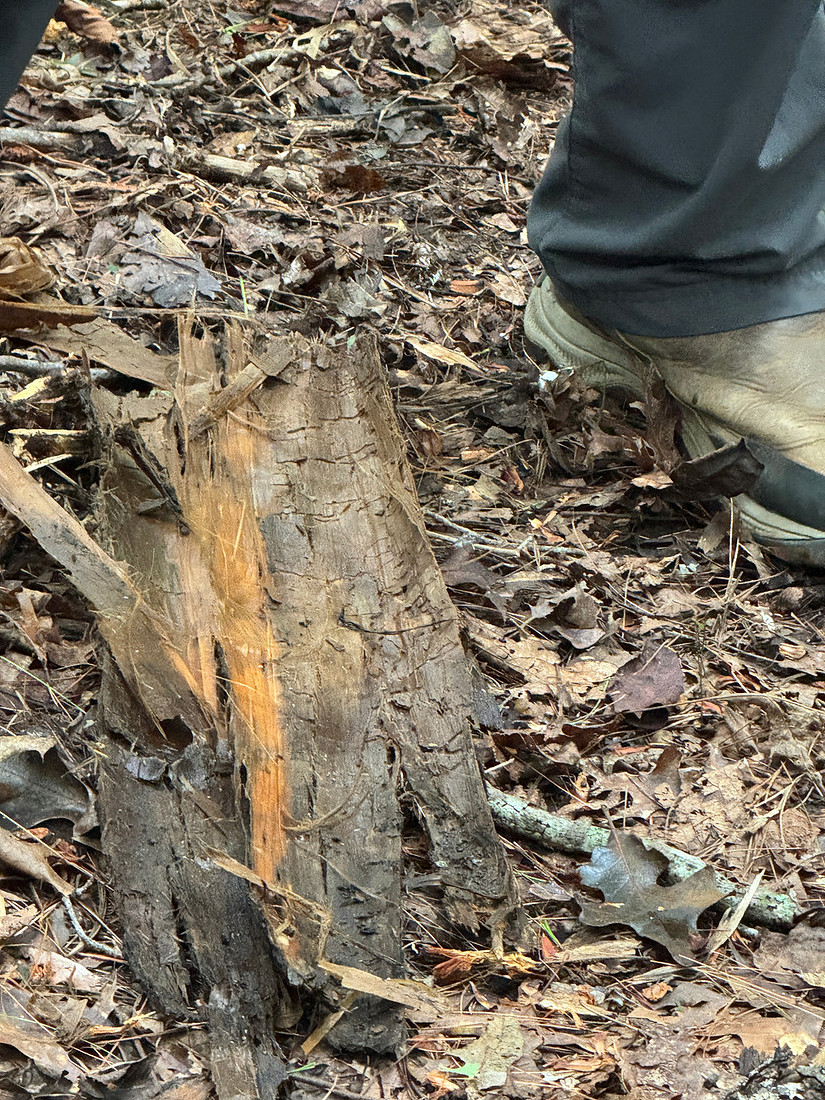
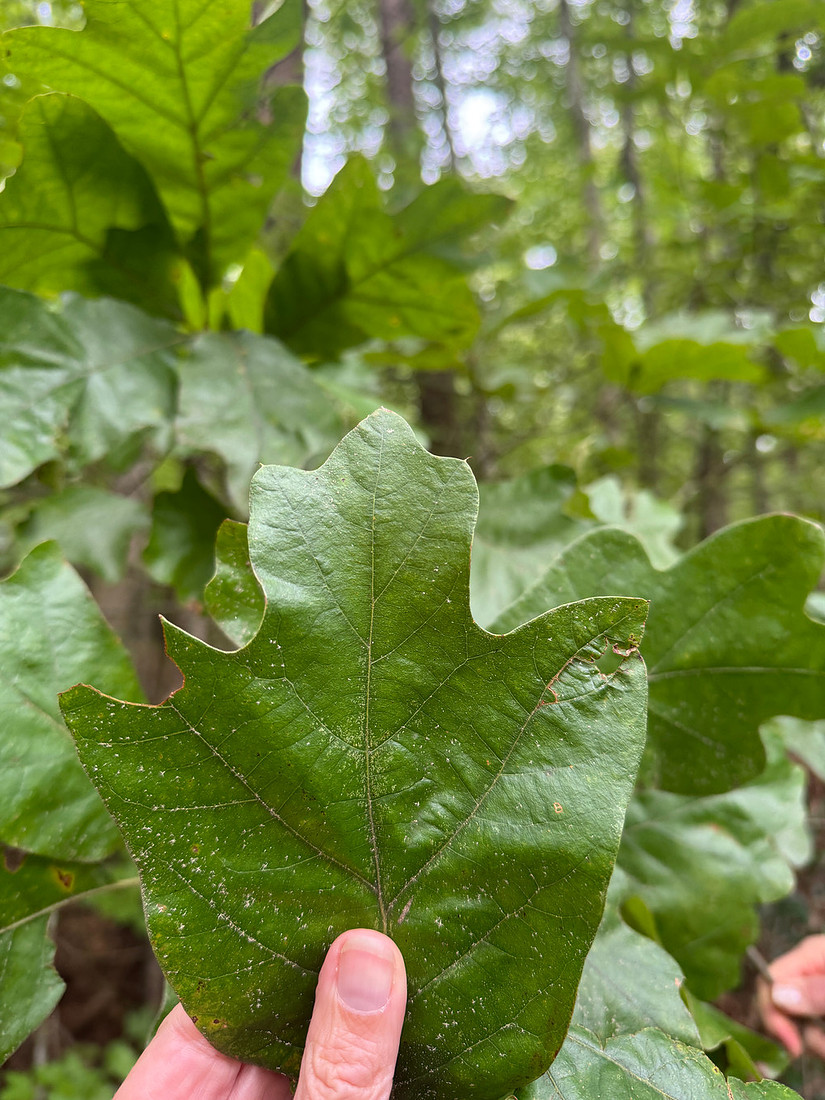
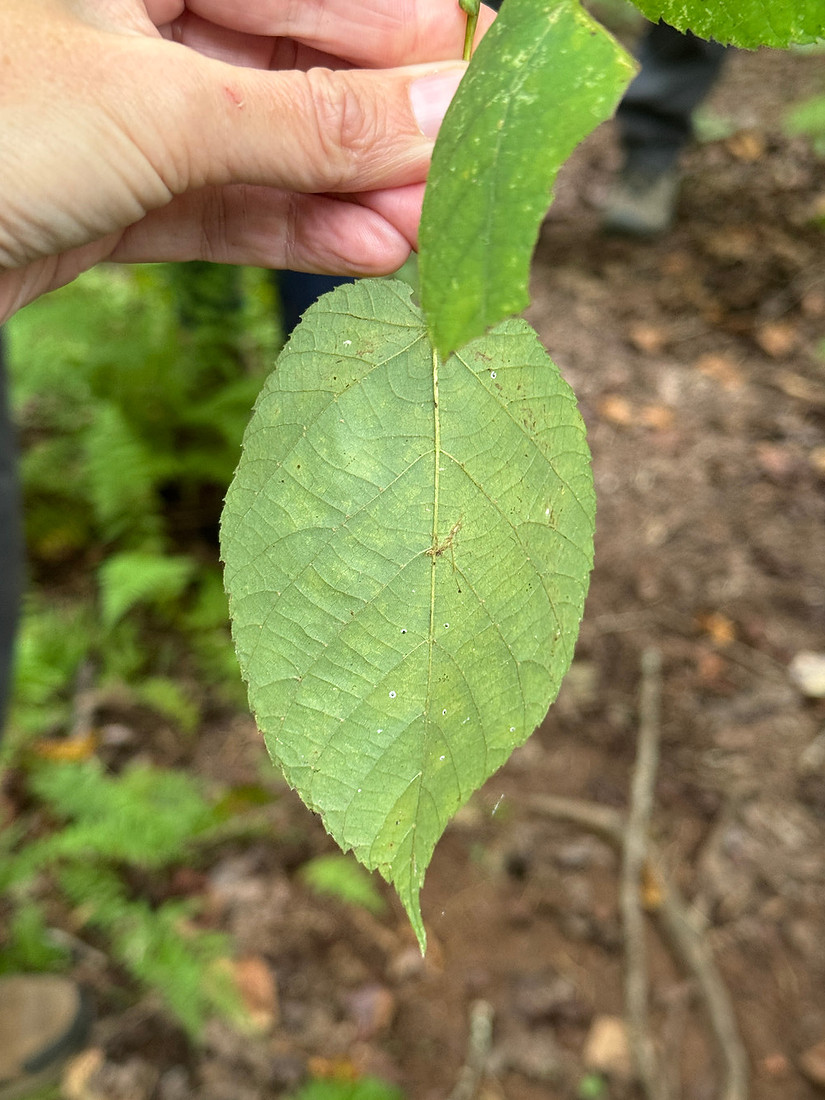
Above- Tulip Magnolia *** Not a Poplar*** The vein of the leaf does not go to a point and has a notch at the end of it. It is highly acidic. Soak the bark to tear into strips and twist into cordage or ball fibers in hand to make kindling. Below A petrified Virginia Pine
This pine rots outside first, great Fat wood for fire. Reddish inner bark.
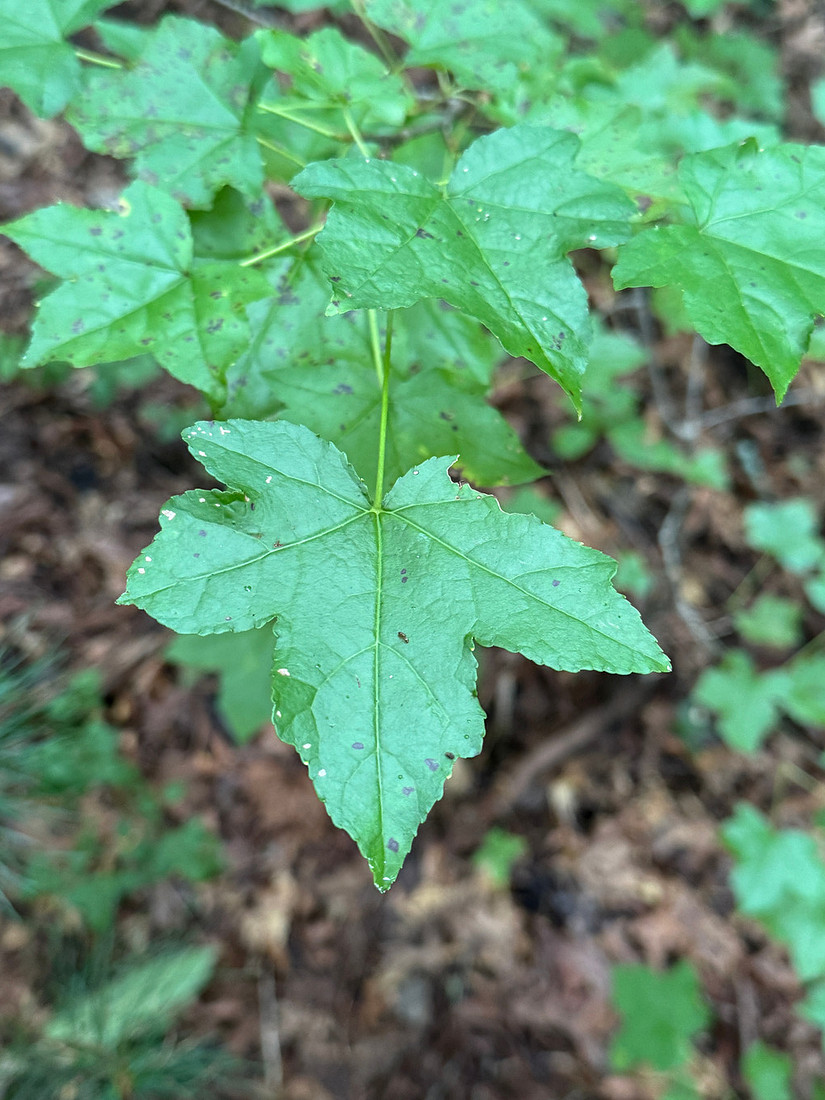
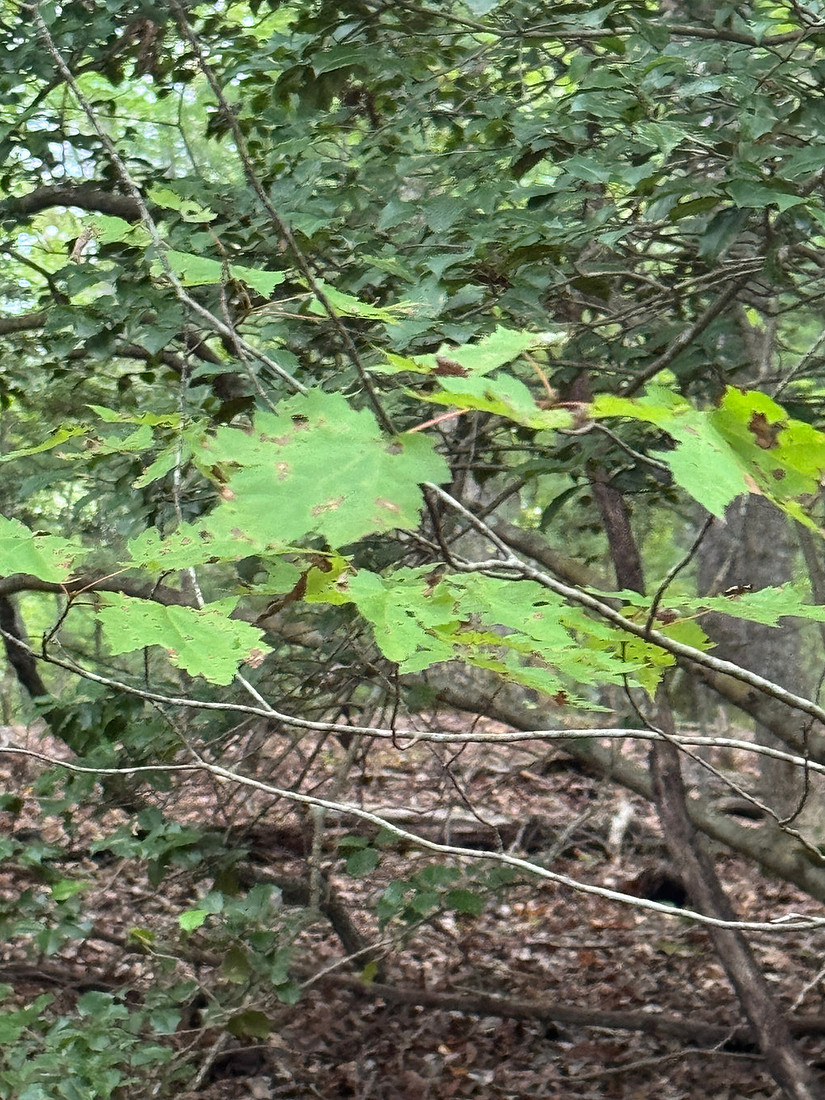
Red Maple Vs. Sweet Gum
Sweet Gum have alternate leaves. They can be crushed and used as a topical antiseptic. They look like a maple but have less jagged edges and smell strong. Bore a hole into the inner bark and create a ball of sap. This can be used as chewing gum for a sore throat.
Red Maple - opposite leaves. This tree provides a fantastic medicine for burns. Fill a container of green leaves, boil water separately and pour over leaves and crush. Once cooled apply to burns. This can be made ahead and stored in the fridge. The leaves will also form a bandage.
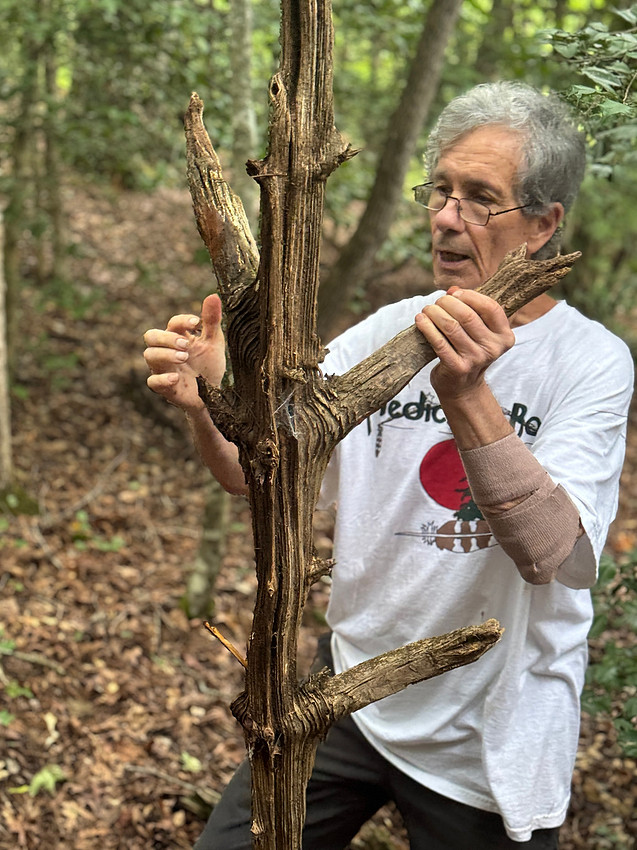
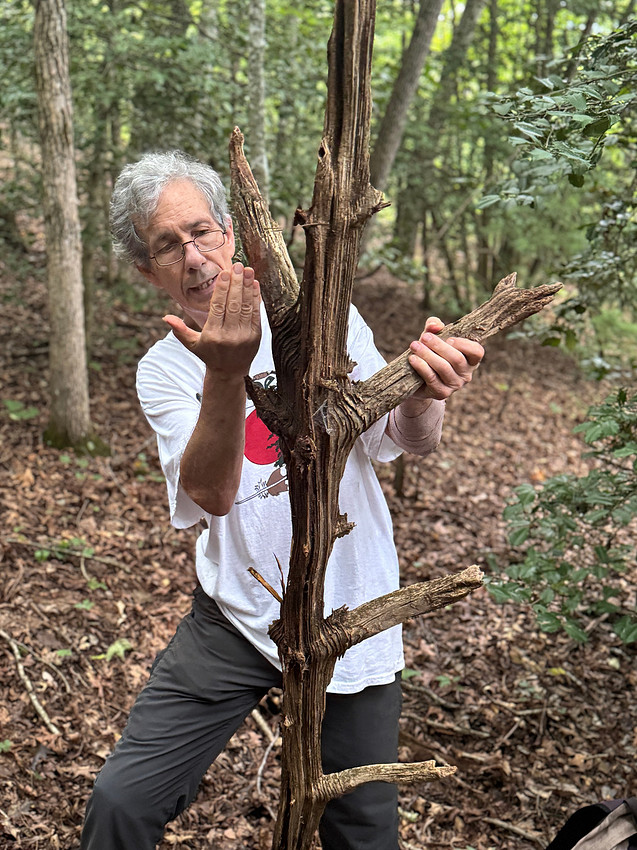
The Sourwood tree is the most crooked tree in the North Georgia forest. However, its suckers make for straight arrow shafts. This is a sacred tree to the Cherokee Indian. The wood is easily carved. Also the leaves can be chewed to cure dry mouth.
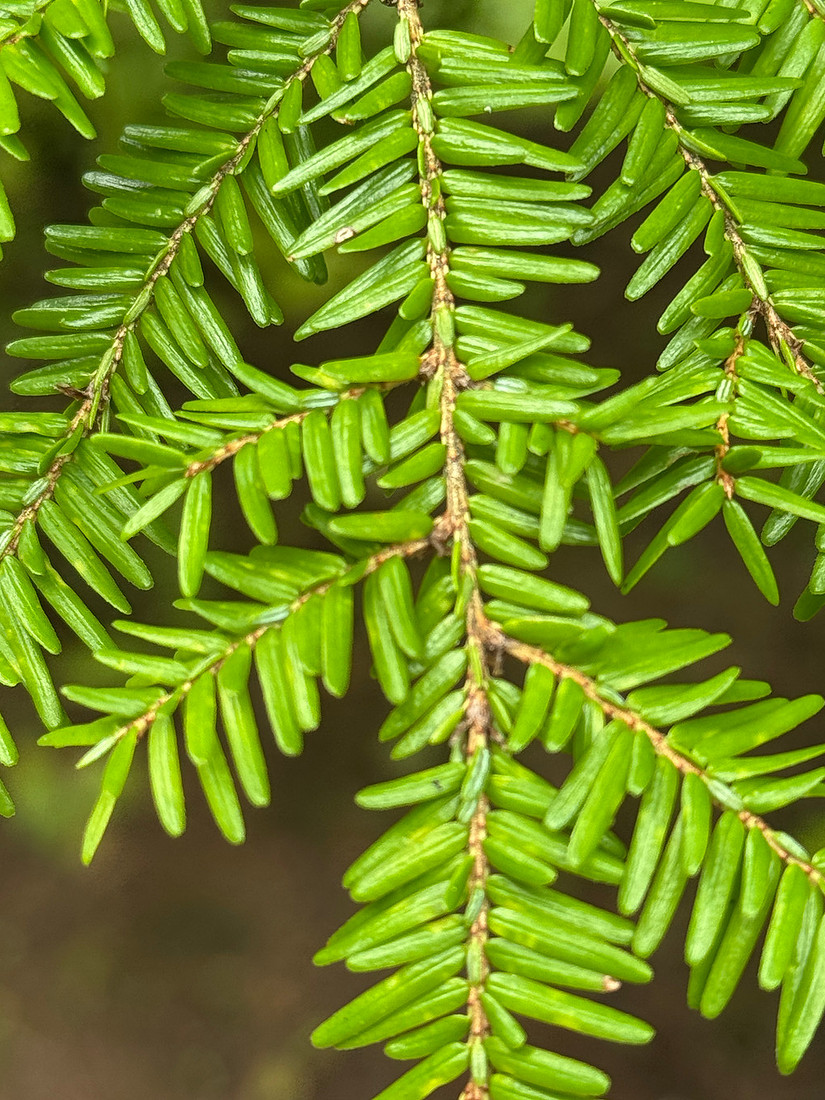
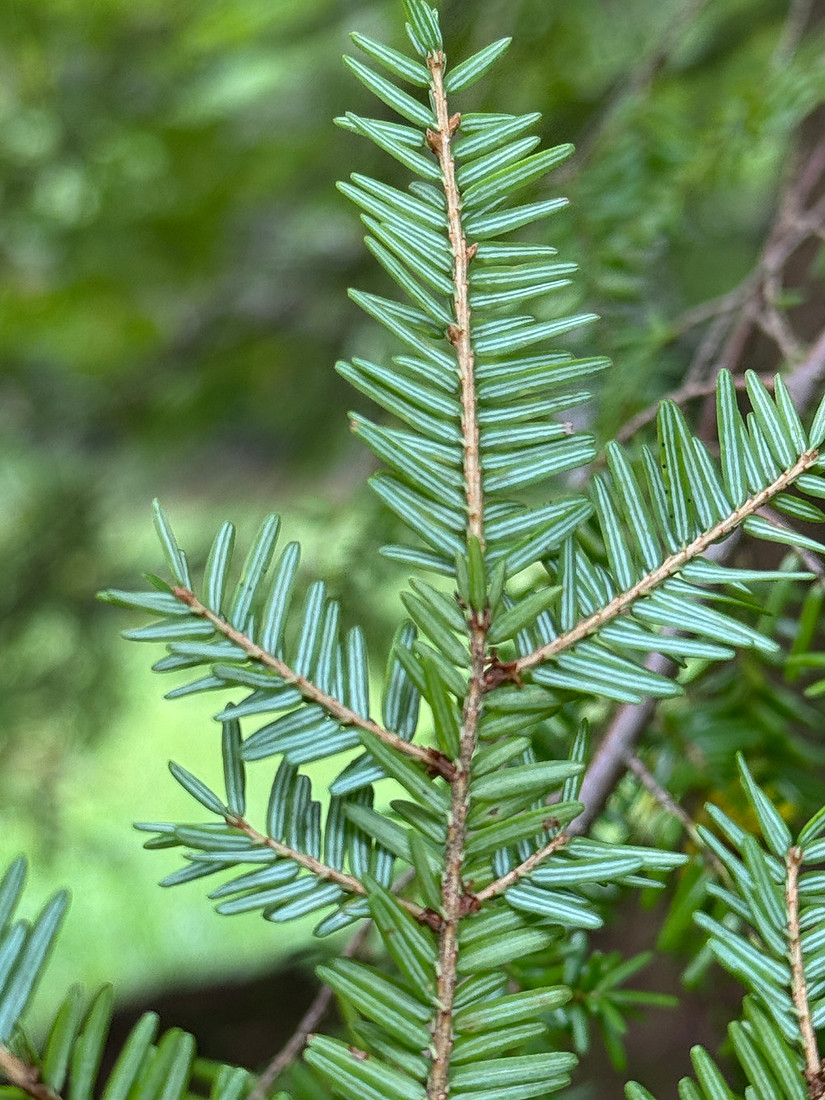
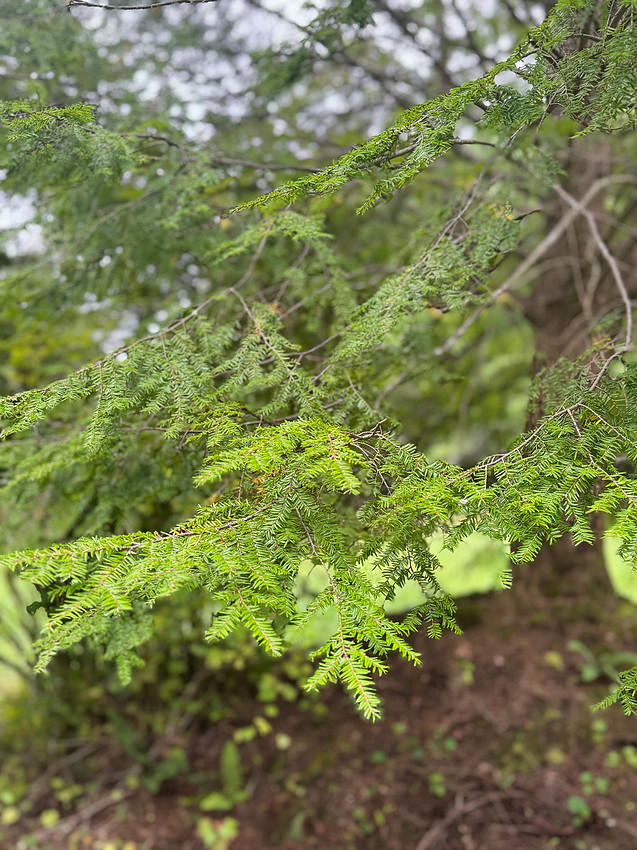
The Hemlock Tree Great fat wood for fire. Has flipped needles, tips are edible, inner bark is edible and soak a lot of bark in water to make a pink dye.
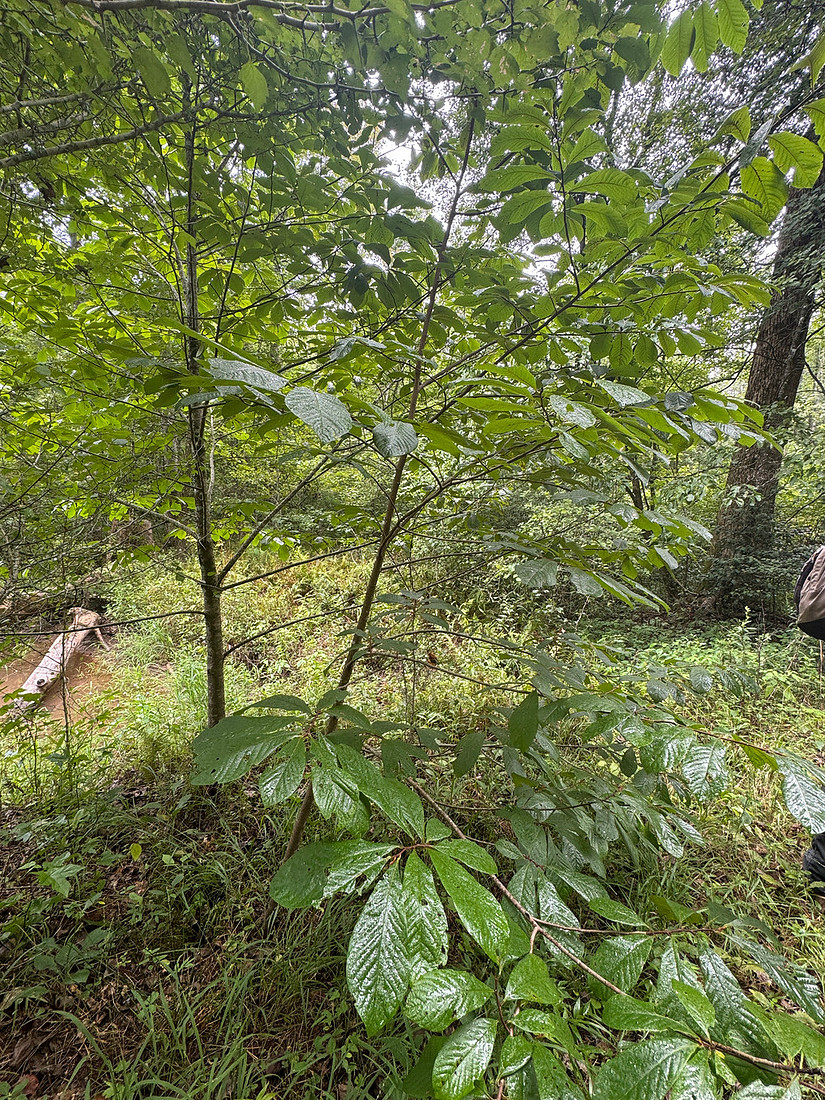
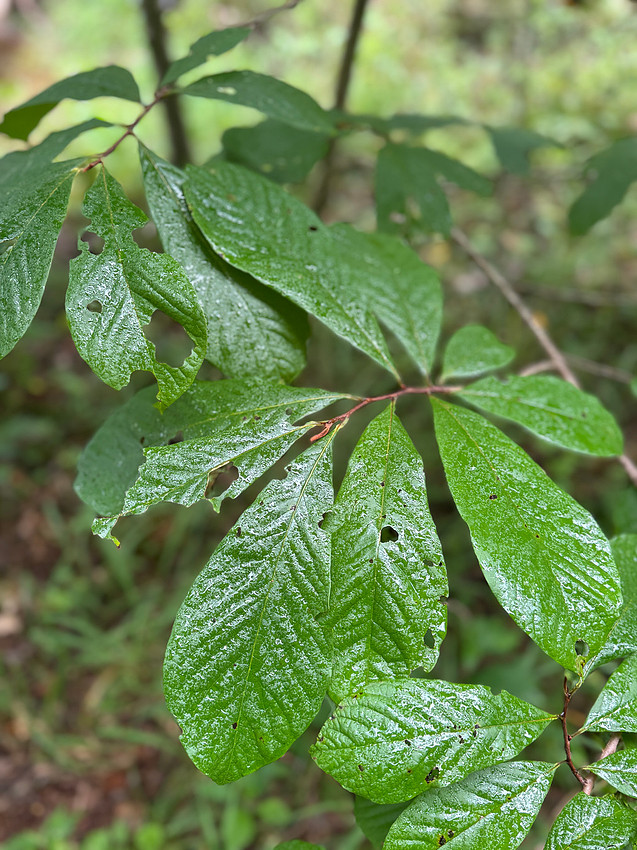
PawPaw tree - leaves make for an insect repellent. Smells like gas or green pepper.
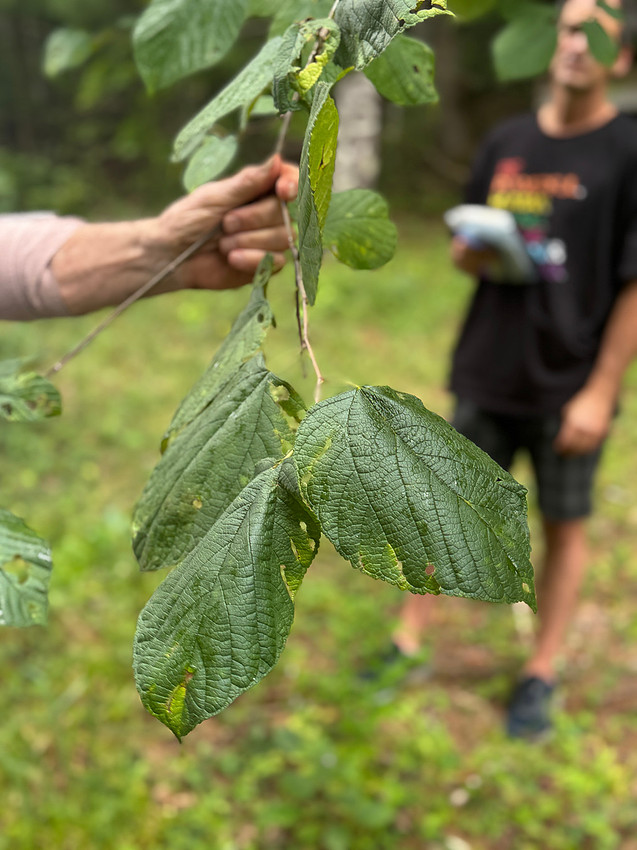
Red Bud-swallowed fire
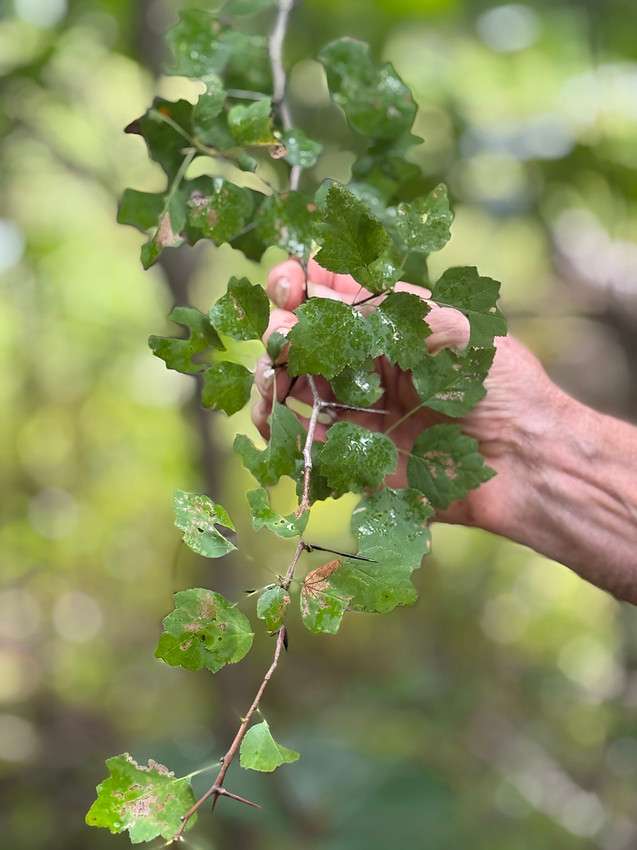
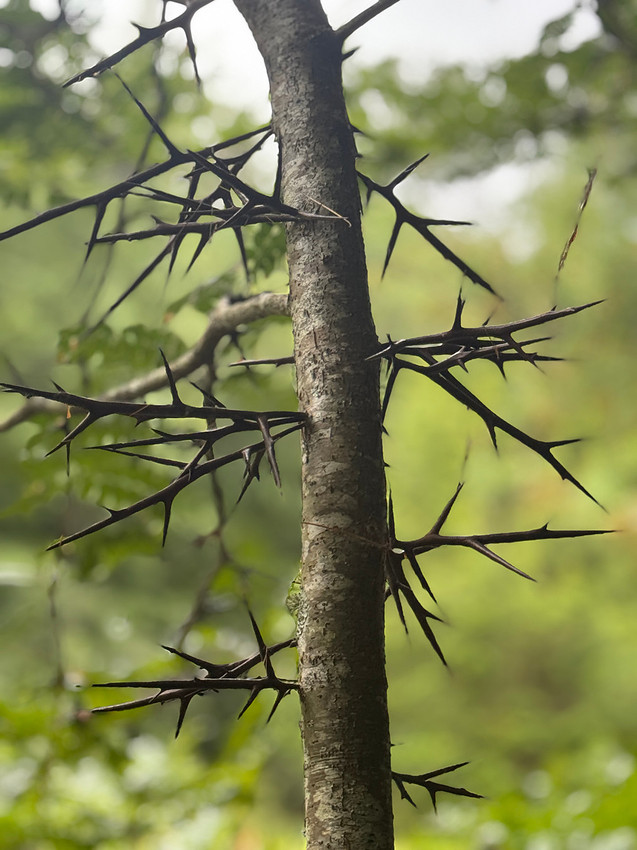
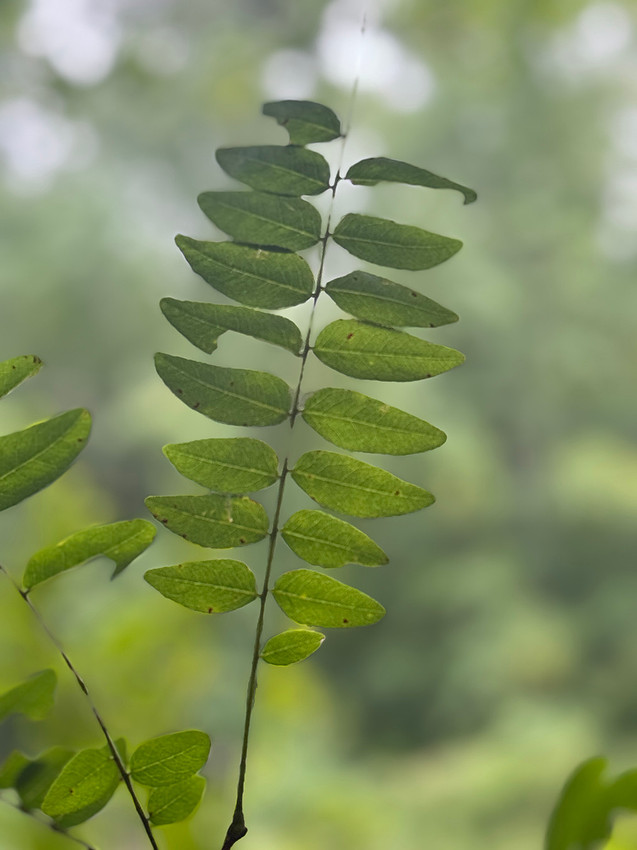
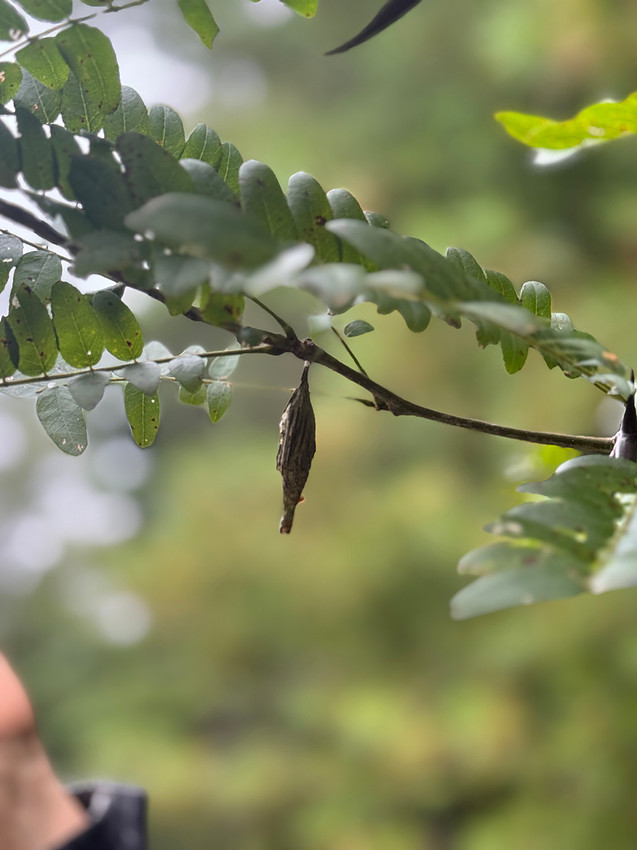
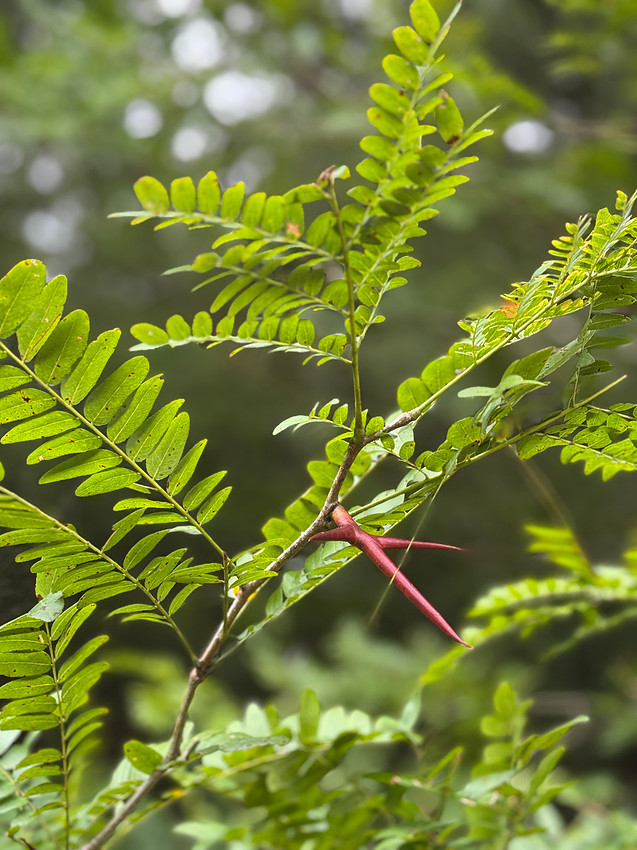
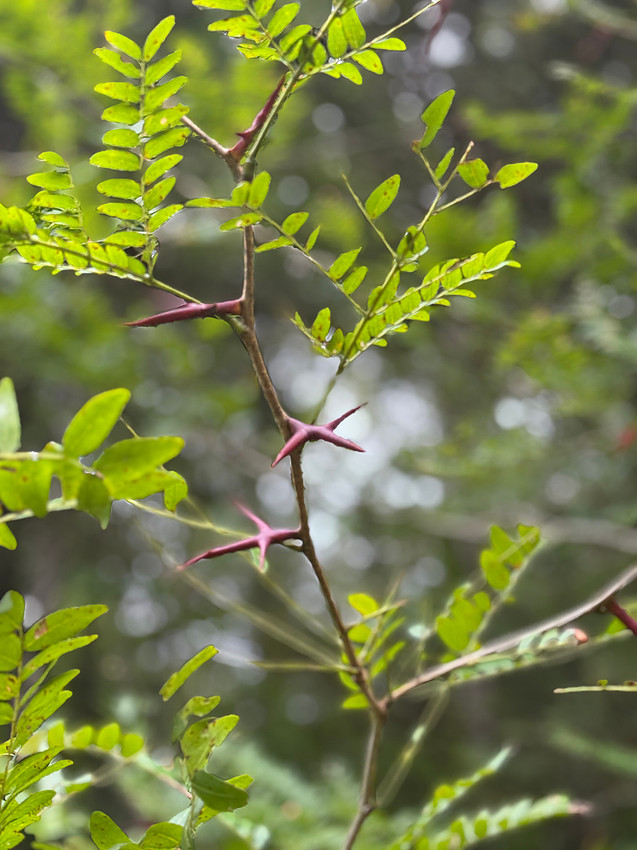
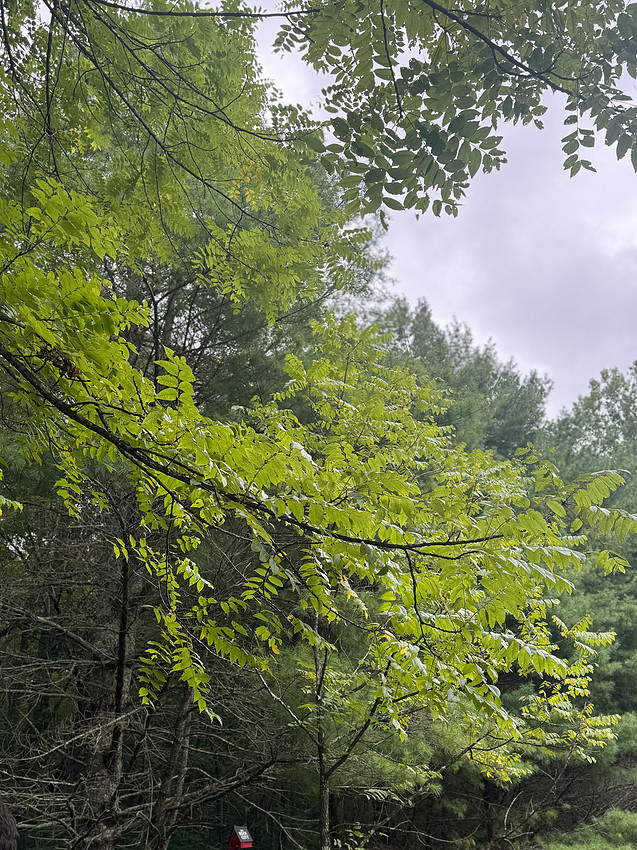
Below is the Honey Locust- pods are edible and taste like mashed bananas. They are covered in thorns.
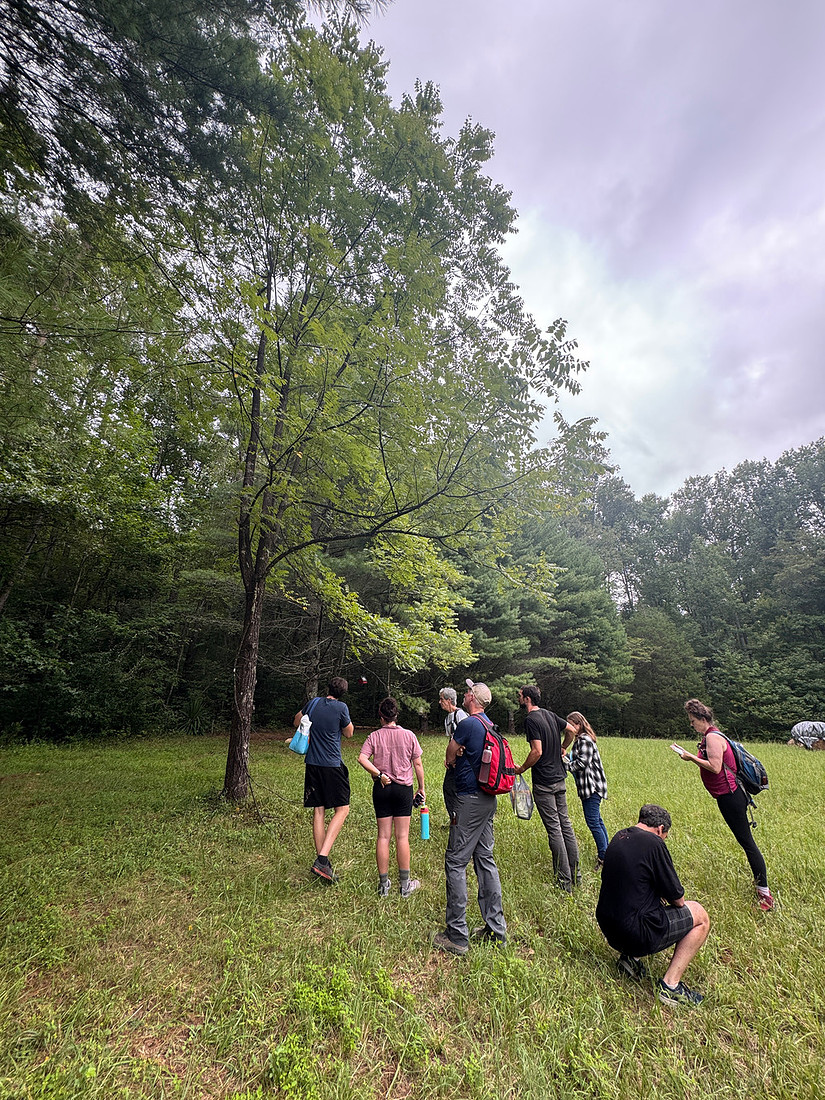
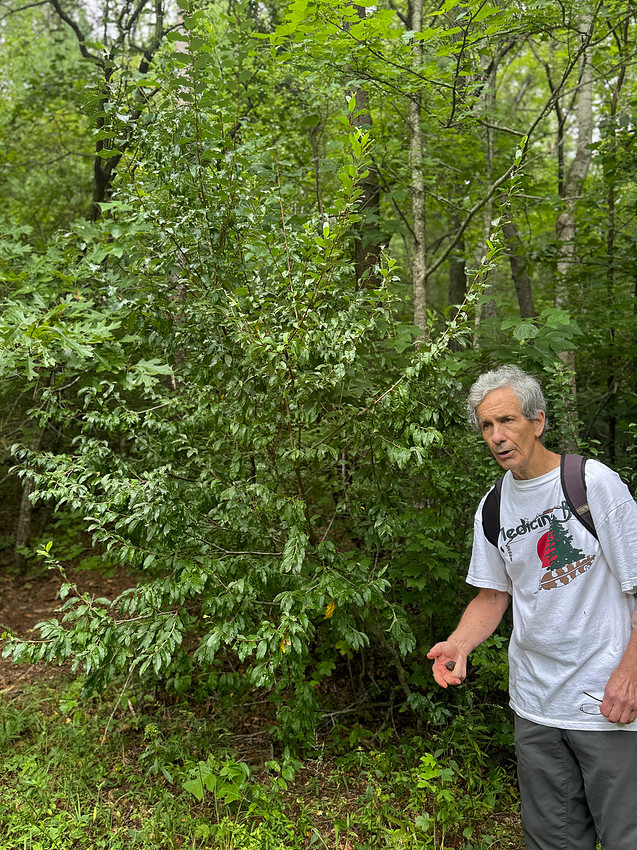
Full Class
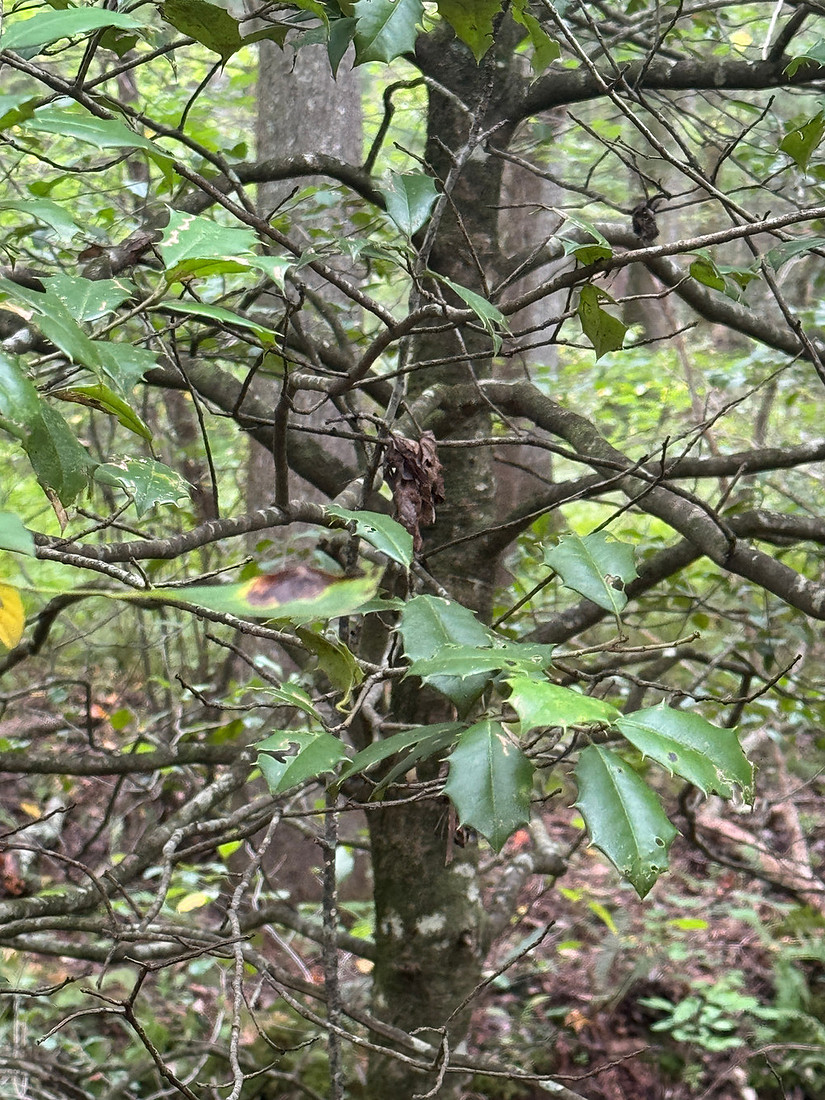
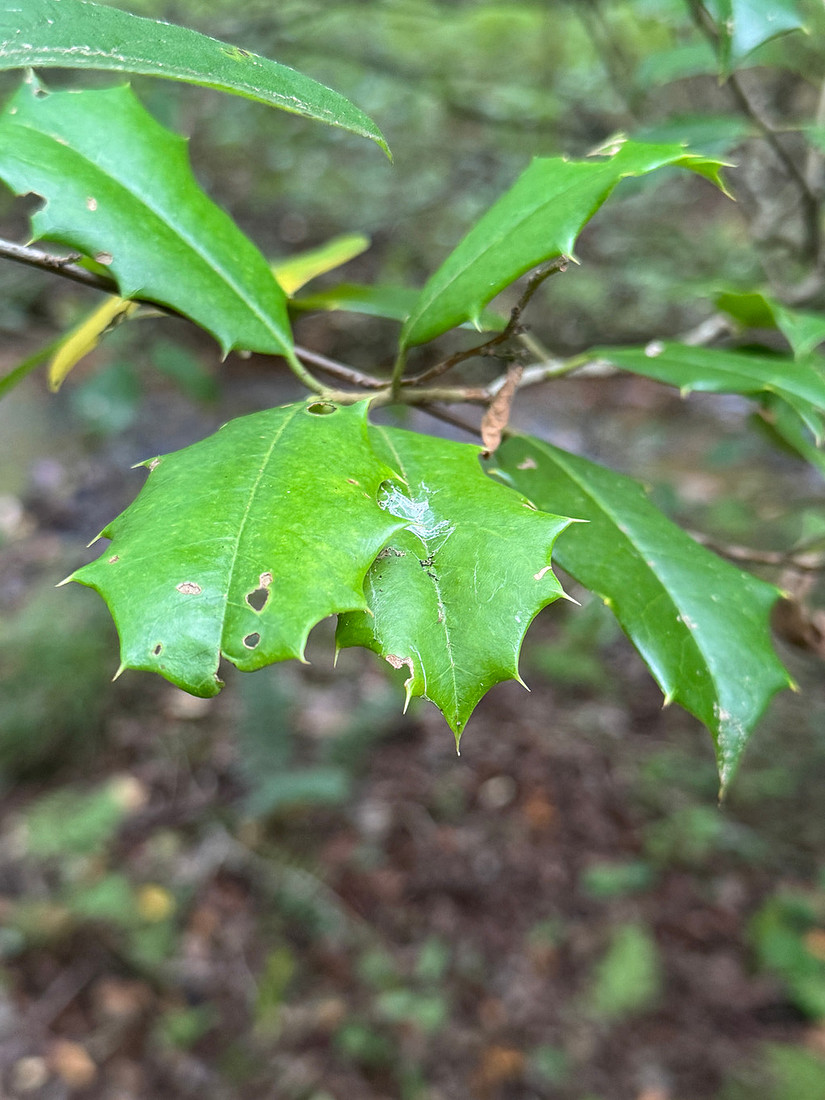
Holly Below
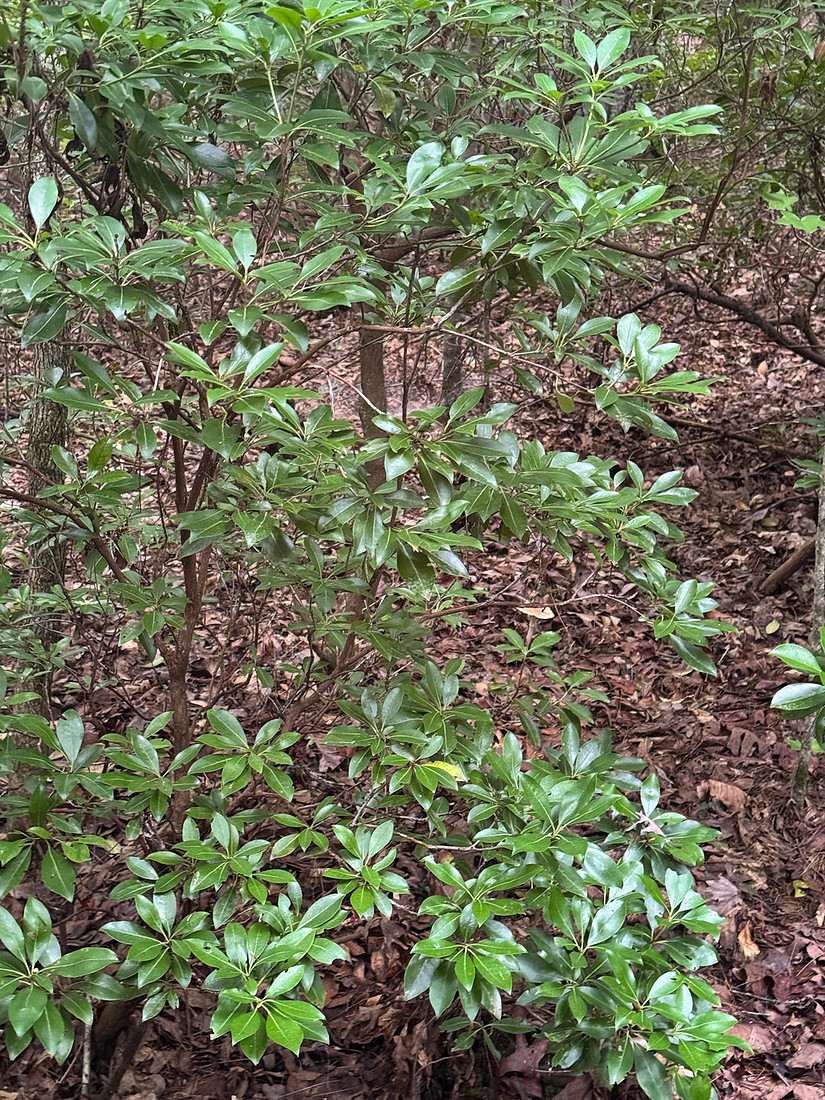
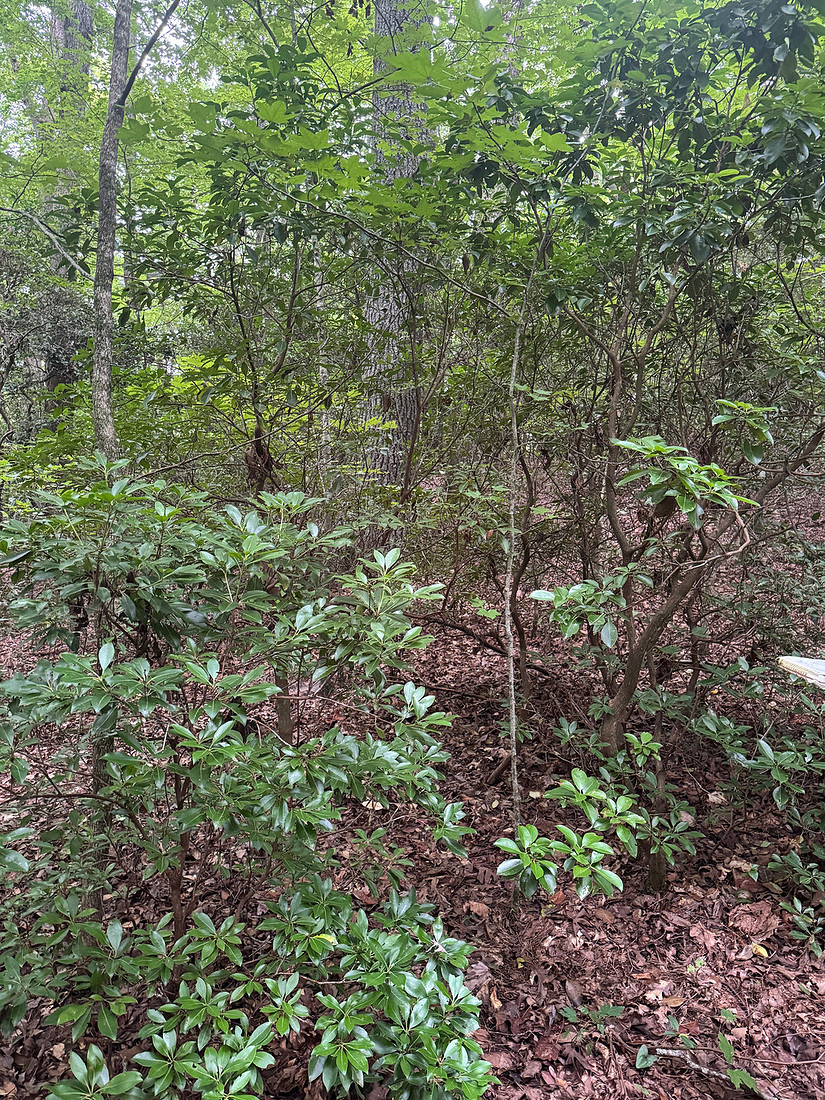
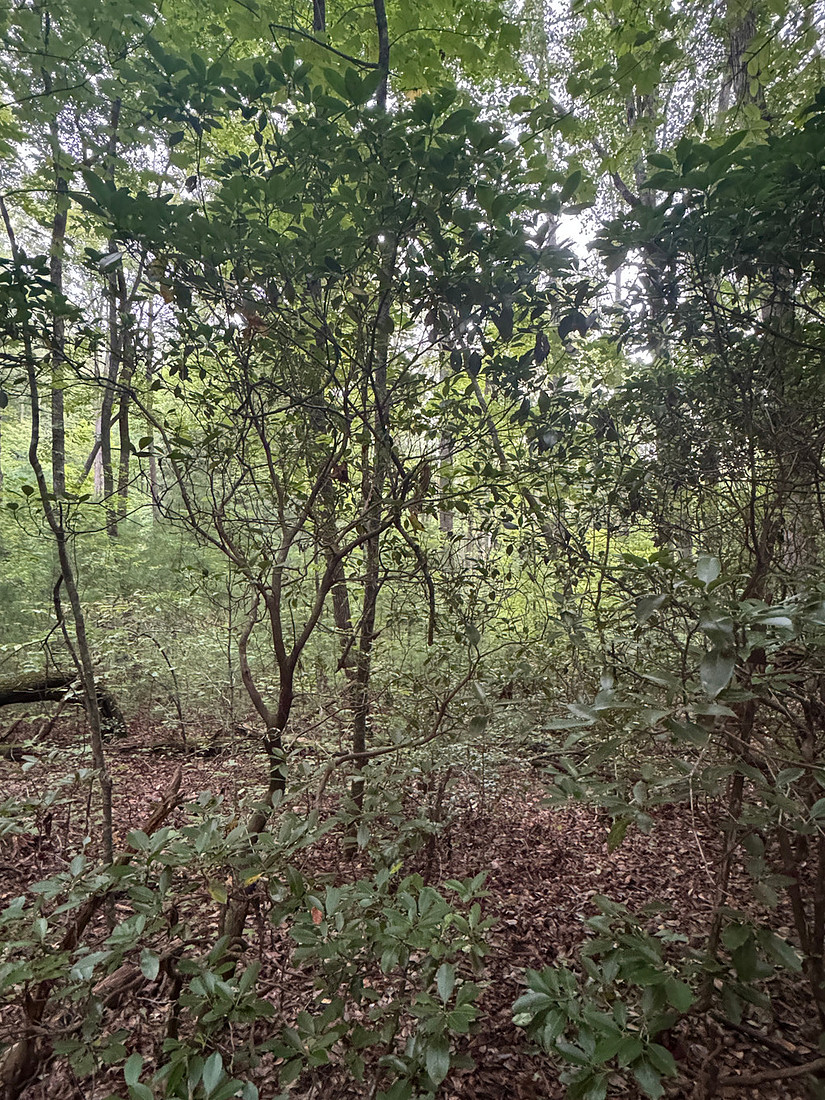
Below is Mountain Laurel, highly poisonous.
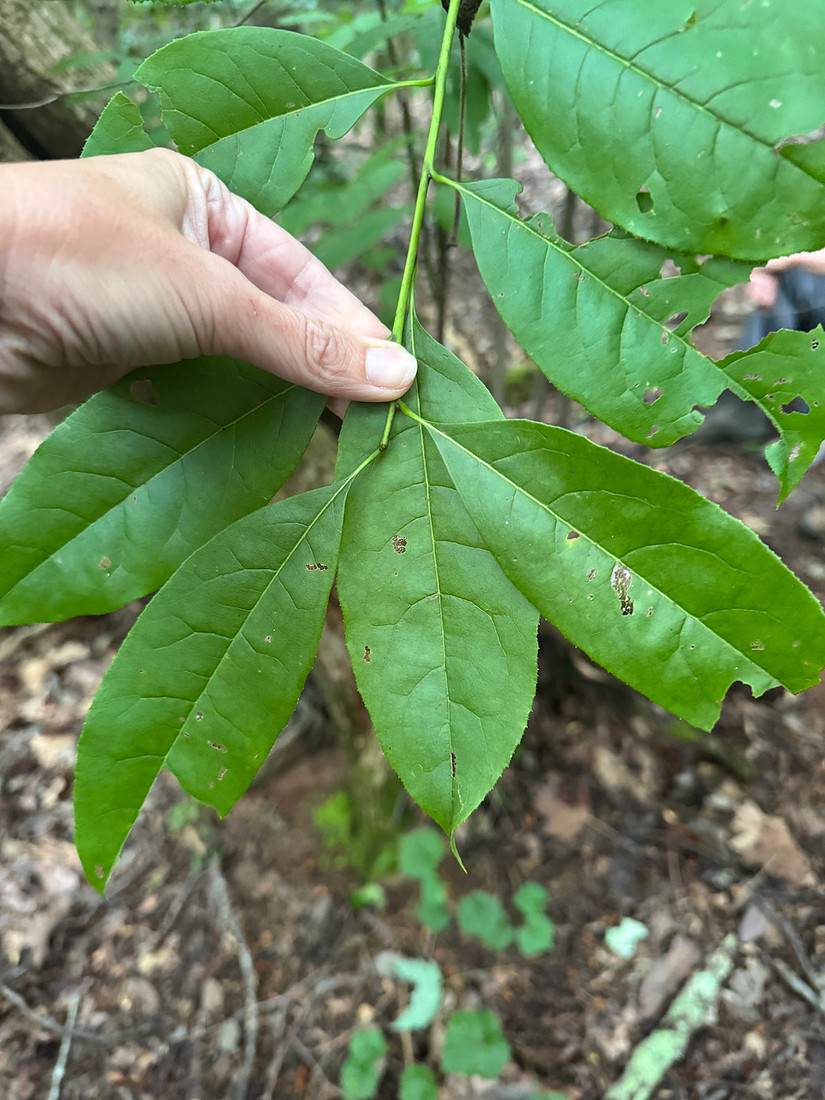
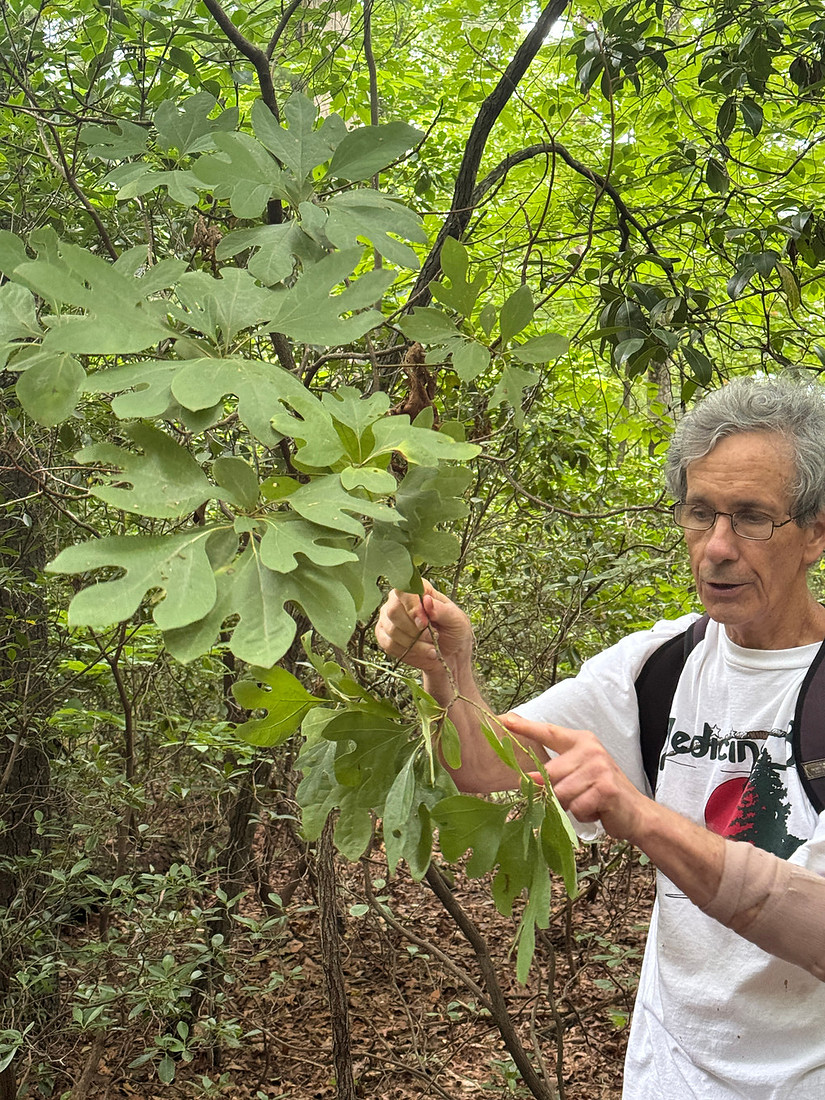
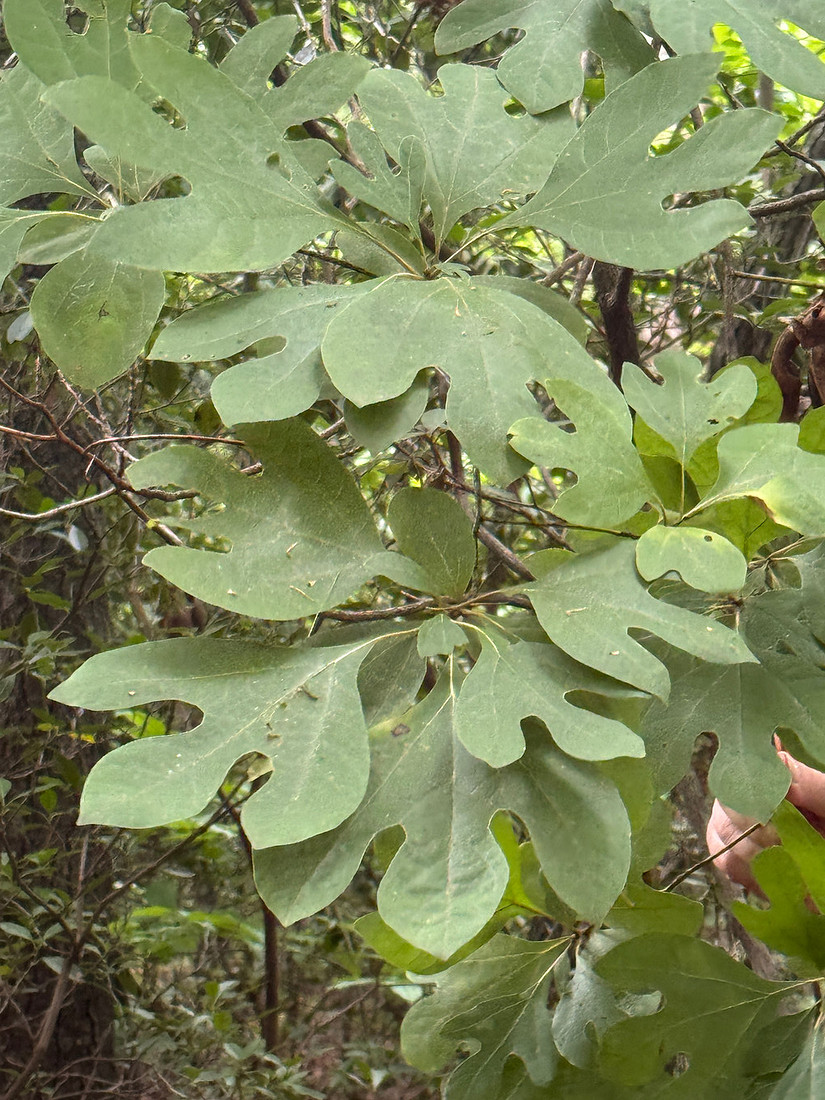
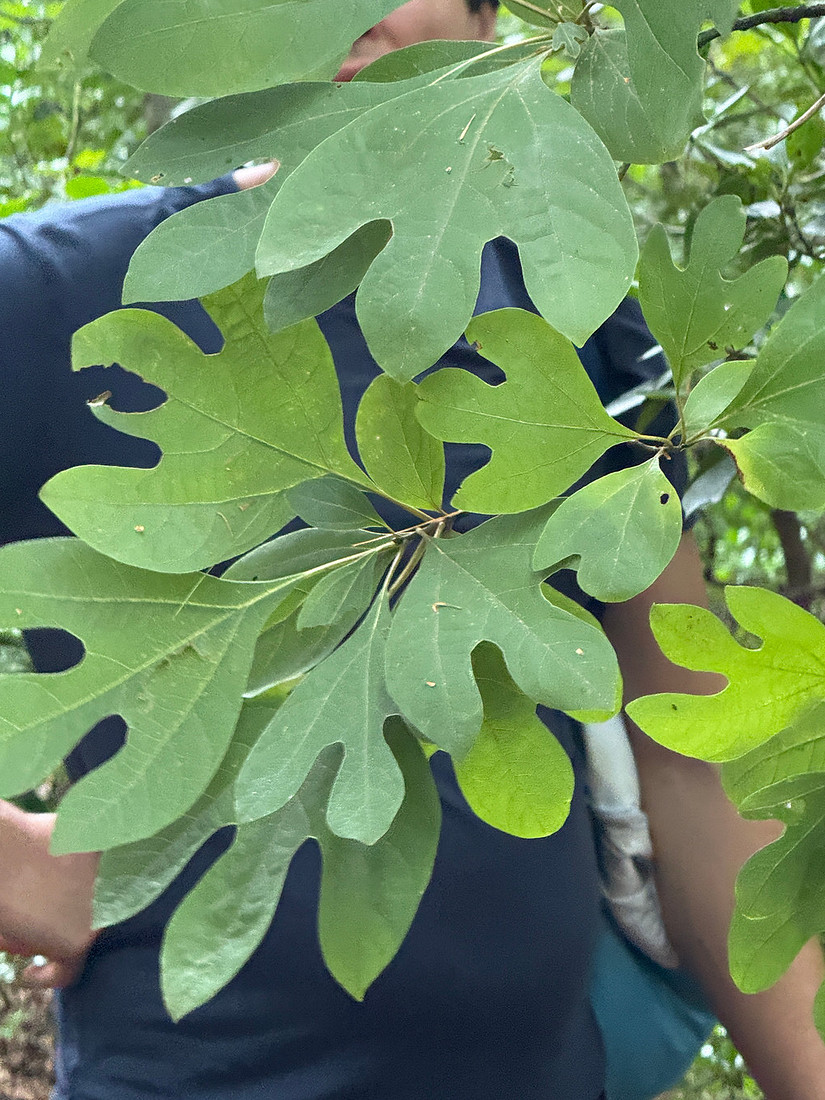
Sassafras tree 3 types of leaves until they get older. Use a root in spring to make a tea-immune booster and cures food poisoning, steep until pink, can store root and reuse.
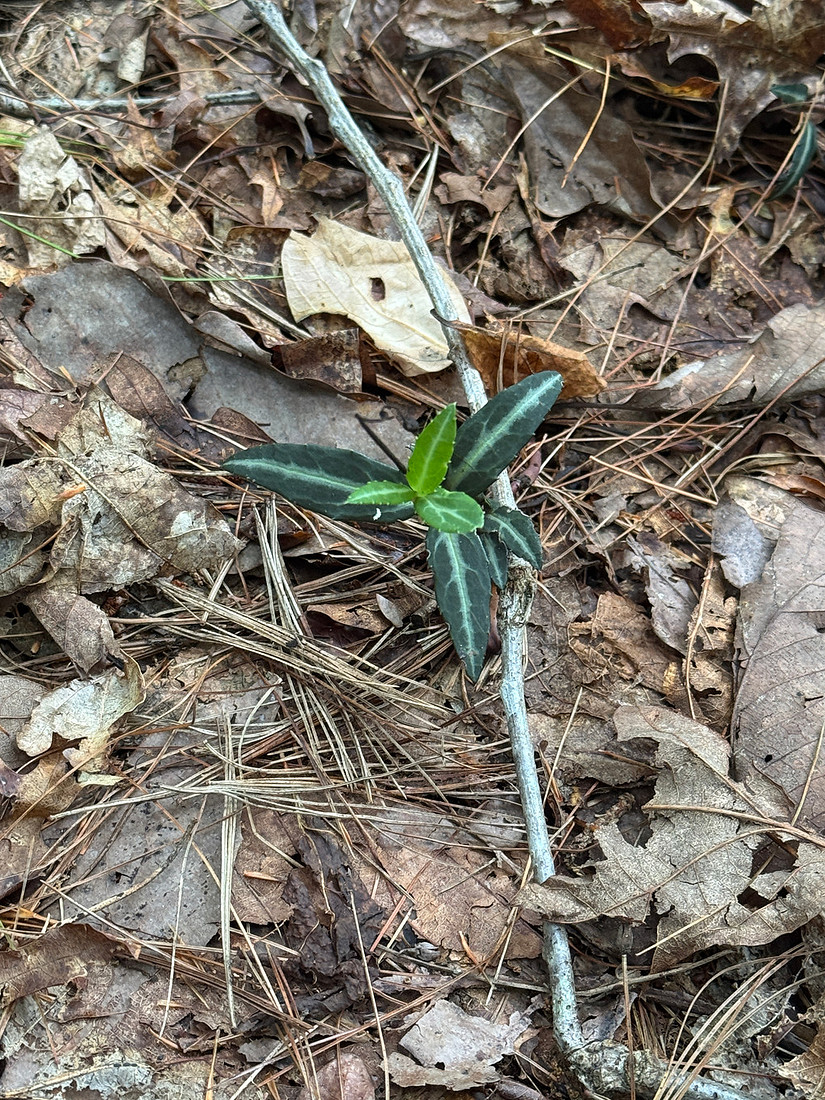
Pipsissewa above cures kidney stones. 1tsp dried leaves in 1 cup water or 2tsp green leaves, crush in water.
This is just a very brief overview of just a handful of the 22 trees we went over in depth. I hope you learned a little something, and of you want to learn more I highly recommend his series, Secrets of the Forest.

Comments
No comments posted.
Loading...
|
Subscribe
RSS
Archive
January
February
March
April
May
June
July
August
September
October
November
December
|